Football combines speed, power, and frequent physical contact, making it both exciting and physically demanding. While enjoyed by players at all levels, the sport carries a high risk of injury. Understanding which injuries are most likely to occur helps reduce risks and supports better recovery.
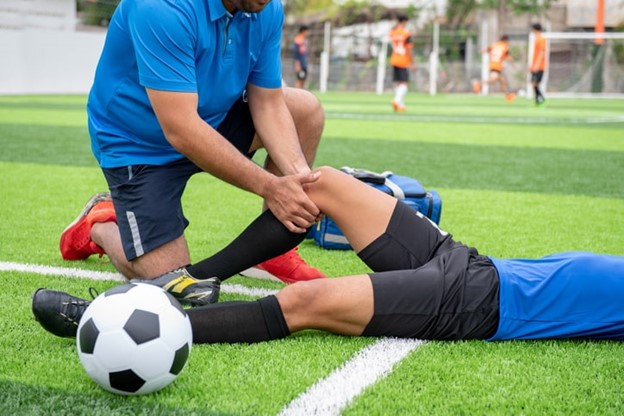
Injuries Commonly Seen in Football
Common football injuries and why they happen so often on the field.
Ankle Injuries
In football, ankle sprains occur more often than any other type of injury. They often result from awkward landings, twisting motions, or unexpected tackles. Damage ranges from mild ligament stretching to severe tears, sometimes requiring extended rehabilitation.
Muscle and Tendon Strains
Hamstring and thigh strains are frequent during sprints, sudden stops, or rapid direction changes. These soft tissue injuries can keep players sidelined for weeks if not treated promptly and appropriately.
Knee Ligament Injuries
The anterior cruciate ligament (ACL) faces a high risk of injury. Injuries often occur during twisting, pivoting, or sudden deceleration. Severe tears may require surgical reconstruction, followed by lengthy rehabilitation.
Contusions and Fractures
Direct impacts with opponents or the ground often cause bruising. While most contusions heal with rest, some impacts may result in fractures needing urgent medical care and, in some cases, surgical intervention.
Concussions
Though less common than lower limb injuries, head trauma remains a serious concern. Symptoms such as headache, confusion, and dizziness require immediate evaluation. Repeated concussions may lead to long-term consequences if not managed correctly.
Injury Patterns in Football
Most football injuries affect the lower limbs due to frequent running, sudden changes in direction, and tackling. Match play carries a higher injury risk than training, with studies showing match injuries can occur up to ten times more often. Professional players often sustain more contact injuries, while non-contact strains are more common among amateurs.
Contributing Factors
Several factors influence injury risk:
- Fitness and conditioning: Inadequate strength, flexibility, or endurance leaves players more prone to injury;
- Previous injury: History of past injuries increases recurrence risk;
- Surface and equipment: Poor playing surfaces or unsuitable footwear contribute to ankle and knee injuries;
- Training load: Rapid increases in training volume or intensity without gradual progression raise the chance of overuse injuries.
Preventive Measures
Reducing football injuries requires planning and preparation:
- Warm-up routines: Gradual increases in activity with dynamic stretches prepare muscles and joints for match demands;
- Strength and flexibility training: Regular exercises improve resilience against strains and ligament injuries;
- Protective equipment: Appropriate footwear and shin guards lower injury risk;
- Technical coaching: Teaching proper techniques for tackling, landing, and cutting reduces strain on joints and muscles;
- Early treatment: Prompt medical care for injuries supports better recovery and limits long-term consequences.
Recovery and Management
Initial care often involves rest, ice application, compression, and elevation. Physiotherapy follows to restore mobility, strength, and sport-specific function. In cases of ligament tears or fractures, surgery may be necessary before returning to full activity.
Conclusion
Football injuries are common but often preventable with proper training, conditioning, and attention to technique. Awareness of typical injury patterns and early management allows players to return safely to the sport. Structured rehabilitation following injury supports full recovery and reduces the chance of recurrence, allowing players to enjoy the game while protecting their long-term health.
For enquiries and online appointments, send a message to www.DrAyyappanVNair.com/contact
For informative videos related to Shoulder problems and their treatment options, Sports Injuries and other orthopedic conditions, visit our YouTube channel Bangalore Shoulder Institute – https://www.youtube.com/@BangaloreShoulderInstitute