
Baseball blends repeated overhead throwing with explosive swings, rapid sprints, slides, and crouched catching positions. Those demands can irritate tendons, strain muscles, or overload joints when workload, technique, and recovery are not well balanced. The scenarios below mirror what clinicians see in everyday practice. Each pair a familiar problem with a practical, evidence-based plan so players can recognise trouble early and return safely.
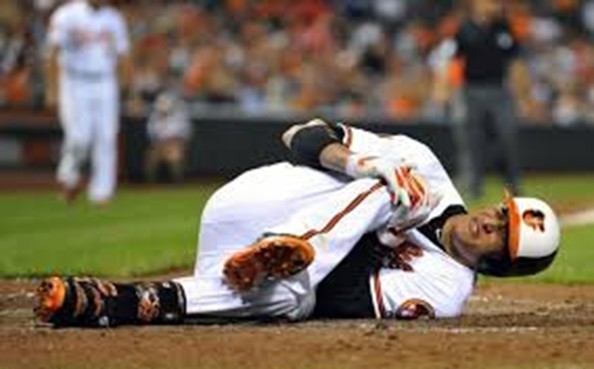
The Pitcher’s Medial Elbow
Valgus stress during late cocking and acceleration can strain the ulnar collateral ligament and the flexor-pronator muscles. Players notice inner elbow pain, loss of zip, or tingling into the ring and little fingers. First steps are relative rest, ice for comfort, and a review of pitch counts and rest days. Rehabilitation builds shoulder blade control, rotator cuff strength, forearm endurance, and lower-body drive so the elbow is not doing all the work. A phased interval throwing programme follows pain-free testing. If there is instability or recurrent failure, surgical reconstruction may be discussed.
The Thrower’s Tight Shoulder
Deep shoulder ache after throwing, night soreness, or a sense of “pinch” during layback often reflect rotator cuff tendinopathy or labral irritation. Treatment begins with scapular setting, external rotation strength, and posterior capsule mobility. Drills in the scapular plane, trunk rotation work, and hip power reduce stress at the top of the arm. Video review helps correct a late arm, early trunk open, or excessive head tilt. Throw volume is rebuilt gradually, starting with flat-ground work before long toss, then bullpens.
The Oblique Twinge On The Swing
A sudden jab at the side of the abdomen during a hard swing or check swing suggests an oblique strain. Expect pain on rotation, coughing, or sit-up motions. Early care includes rest from painful twisting, gentle breathing drills, and isometric core work. Progress to anti-rotation exercises, then controlled rotational medicine-ball work before full batting practice. Do not rush back to maximal swings; quality contact work and pitch recognition can maintain timing while tissues heal.
The Base Runner’s Hamstring Pull
Accelerating out of the box or chasing a fly ball places heavy demand on the hamstrings. A sharp grab high in the back of the thigh is typical. Initial management is relative rest and protected walking. Rehab starts with pain-free range, then bridges and hip hinge drills, followed by progressive sprint mechanics and Nordic curls. Return criteria include pain-free top-speed strides, strong eccentric control, and confident change of pace.
The Bat Sting Wrist And Hand
Vibration from mishits or the knob contacting the palm can irritate the hook of the hamate or sprain small wrist ligaments. Suspect a hamate fracture if there is ulnar-side wrist pain with grip weakness. Rest the hand, use a padded grip or different knob shape on return, and seek imaging for persistent symptoms. Some fractures require surgical excision; most sprains recover with splinting and hand therapy.
Conclusion
Most baseball injuries respond well to early recognition, sensible first aid, and rehabilitation that restores control as well as strength. Small adjustments in workload, mechanics, and recovery habits protect performance across a long season. See an orthopaedic specialist if pain lingers, keeps you awake at night, or interferes with everyday activities. With a clear diagnosis and a staged plan, players can return to the mound, the plate, and the field with confidence.
For enquiries and online appointments, send a message to www.DrAyyappanVNair.com/contact
For informative videos related to Shoulder problems and their treatment options, Sports Injuries and other orthopedic conditions, visit our YouTube channel Bangalore Shoulder Institute – https://www.youtube.com/@BangaloreShoulderInstitute
FAQs on Common Sports Injuries in Baseball
Why do baseball players often develop injuries without a single obvious accident?
Baseball places unique stress on the body because of repeated throwing, sprinting, sudden stops, and rotational movements. Many injuries develop gradually rather than from one clear incident. Repeated stress on muscles, tendons, and joints leads to gradual tissue overload, where microscopic damage accumulates faster than natural repair.
Throwing is particularly demanding. Each pitch places strain on the shoulder and elbow, especially when mechanics are inconsistent or fatigue sets in. Players often continue training despite mild discomfort, assuming it is normal. However, pain that builds slowly and does not fully settle between sessions usually indicates overuse rather than simple soreness.
Lower-body injuries can also develop without trauma. Sprinting, sliding, and quick direction changes place stress on the hamstrings, calves, and hips. Poor flexibility, strength imbalance, or inadequate recovery increases risk. Early recognition and proper load management are key to preventing minor symptoms from becoming long-term injuries.
How can I tell if my baseball injury is overuse or something more serious?
Overuse injuries tend to cause gradually increasing pain, stiffness, or tightness that worsens with activity and improves slightly with rest. Performance may decline before sharp pain appears. These injuries often feel manageable at first, which is why players delay seeking help.
More serious injuries usually cause sudden pain, swelling, weakness, or loss of function.
Examples include sharp elbow pain during throwing, inability to lift the arm normally, or a sudden pull in the thigh while sprinting. Pain that changes throwing mechanics, affects accuracy, or limits speed should always be assessed.
Warning signs that need medical review include persistent pain lasting more than a few days, reduced range of motion, visible swelling, or pain at rest or night. Early assessment helps prevent progression and often significantly shortens recovery time.
Why are elbow and shoulder injuries so common in baseball players?
The throwing motion places extreme forces on the shoulder and elbow, particularly during the acceleration and follow-through phases. Repeating this motion hundreds of times per week stresses ligaments, tendons, and joint surfaces.
The elbow relies on ligament support to control valgus stress during throwing. When this ligament is overloaded, pain and instability can develop. The shoulder depends on precise coordination between muscles for stability. Even small imbalances can lead to irritation and breakdown over time.
Fatigue plays a major role. As muscles tire, joint stress increases. Poor recovery, year-round throwing, and inadequate strength training all contribute. Preventing shoulder and elbow injuries requires attention to workload, mechanics, strength, and rest, rather than focusing on a single factor.
Can continuing to play through pain make baseball injuries worse?
Yes. Playing through pain often turns manageable injuries into long-term problems. Pain alters movement patterns, increasing stress on other joints and tissues. This compensation can lead to secondary injuries affecting the back, hips, or opposite limb.
Overuse injuries worsen when the body is not given time to repair itself. Tendon and ligament injuries respond poorly to repeated strain without recovery. Ignoring pain can lead to prolonged inflammation, tissue breakdown, and a longer time away from sport.
Early modification of activity does not always mean complete rest. Adjusting training volume, position-specific demands, and rehabilitation exercises often allows continued participation while healing occurs. Delaying care usually results in more complex treatment later.
What role does rehabilitation play compared to simple rest?
Rest alone reduces symptoms but does not correct the underlying cause of most baseball injuries. Rehabilitation addresses strength deficits, flexibility limitations, coordination issues, and faulty movement patterns that led to injury.
Throwing athletes require specific conditioning of the shoulder, elbow, core, and lower body. Rehabilitation also focuses on restoring timing and control throughout the kinetic chain, not just the painful area. Without this, returning to play carries a high risk of recurrence.
A structured rehabilitation programme prepares the body to tolerate throwing, sprinting, and sudden movements again. Gradual progression is essential. Skipping rehabilitation often leads to repeated injury and inconsistent performance.
How can long-term injury risk be reduced in baseball players?
Reducing injury risk requires consistent attention to workload, recovery, and technique. Sudden increases in training intensity or throwing volume significantly raise injury risk. Proper warm-up, strength training, and rest days are essential.
Monitoring fatigue is equally important. Declines in accuracy, speed, or control often signal overload. Addressing these signs early prevents injury. Flexibility, core strength, and lower-body conditioning support efficient throwing mechanics and reduce joint stress.
Regular assessment, even when pain is mild, helps identify risk factors early. Injury prevention is an ongoing process rather than a one-time fix.
Are baseball injuries different between pitchers and field players?
Yes, the types of injuries often differ because the physical demands of each role are different. Pitchers place repeated stress on the shoulder and elbow due to high-volume throwing. This makes ligament and tendon problems more common in the throwing arm. Field players throw less frequently but sprint, twist, and stop suddenly, which increases the risk of muscle strains, particularly in the legs and hips.
Understanding these differences is important because injury prevention and rehabilitation need to be role-specific rather than generic.
Does age affect the type of baseball injuries players experience?
Age influences both injury pattern and recovery. Younger players are more likely to develop overuse injuries because their bones and growth plates are still developing and may not tolerate repetitive throwing well. In older players, injuries often involve muscles and tendons that have reduced elasticity and recovery capacity.
Training volume, rest, and conditioning should be adjusted according to age to reduce injury risk and support long-term participation in the sport.
Is it safe to return to baseball after an injury?
Returning to baseball is usually safe when pain has resolved, strength has been restored, and normal movement patterns are regained. Simply feeling better is not enough. The body must tolerate sport-specific actions such as throwing, sprinting, and rapid direction changes.
A gradual return under professional guidance reduces the risk of reinjury. Rushing back to full play is one of the most common reasons injuries recur, even when initial recovery seems complete.