
Soccer is a continuous blend of sprints, sharp cuts, sudden stops, tackles, jumps, and landings. Those same actions can irritate tendons, strain muscles, and overload joints when workload, technique, and recovery fall out of balance. The scenarios below mirror what clinicians see every week. Each pair a familiar problem with a practical, evidence-based plan so players can recognise trouble early, act confidently, and return safely.
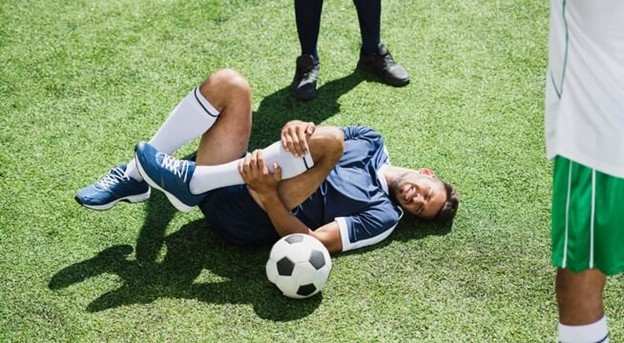
The Pivoting Knee
A quick change of direction or awkward landing can strain the medial collateral ligament or, in severe cases, the anterior cruciate ligament. Signs include a pop, rapid swelling, and a feeling that the knee gives way. Stop play, protect the joint, and arrange prompt assessment. Early care uses relative rest and swelling control, followed by physiotherapy for hip and quadriceps strength, balance, and controlled deceleration. Prevention focuses on landing mechanics, single-leg strength, and planned turn drills that keep the knee tracking over the toes.
The Touchline Ankle Roll
Lateral ankle sprains are common when a foot lands on an uneven surface or another player’s boot. Expect outer ankle pain, swelling, and difficulty weight bearing. Immediate steps are protection, compression, elevation, and brief icing for comfort. Begin a gentle range of motion as pain allows, then progress to balance work, single-leg calf raises, and hopping. A lace-up brace or supportive taping can help during the early return. Good boot fit, firm heel counters, and awareness in crowded areas reduce the chance of a repeat sprain.
The Sprinting Hamstring
Top speed chases place heavy demand on the hamstrings. A sharp grab high in the back of the thigh is typical. Early management is relative rest and protected walking, not total inactivity. Rehabilitation starts with pain-free range, bridges, and hip hinge drills, then progresses to eccentric strengthening such as Nordic curls and graded sprint mechanics. Return when you can run at near top speed, change pace, and decelerate without pain or apprehension. Ongoing posterior chain strength is the best protection.
The Groin From Cutting and Kicking
Repeated side steps and powerful crosses stress the adductors and hip flexors. Pain sits deep in the inner groin or the front of the hip and worsens with long passes, rapid cuts, or sudden stops. Useful first steps are load modification and isometric adductor work for pain relief. Progress with Copenhagen adductor exercises, trunk control, and hip mobility. Manage kick counts during the build back and avoid large jumps in training volume. Persistent catching or clicking deserves assessment for labral involvement.
The Keeper’s Shoulder and Fingers
Diving, overhead throws, and hard catches can irritate the rotator cuff or sprain finger joints. A simple plan helps most cases. Restore shoulder blade control, external rotation strength, and thoracic mobility, then rebuild overhead work gradually. Finger injuries need prompt assessment, short protection, and buddy taping as motion returns. Catching technique with relaxed hands, correct glove size, and safe diving practice reduces recurrence.
Conclusion
Most soccer injuries recover best when recognised early, managed with practical first aid, and followed by rehabilitation that restores both control and strength. Small changes in training load, movement patterns, and recovery routines can help protect performance over a long season. If pain lingers or begins to disturb sleep or daily activities, it’s important to seek an orthopaedic review. With an accurate diagnosis and a structured treatment plan, players can return to training and matches with greater confidence and reduced risk of setback.
For enquiries and online appointments, send a message to www.DrAyyappanVNair.com/contact
For informative videos related to Shoulder problems and their treatment options, Sports Injuries and other orthopedic conditions, visit our YouTube channel Bangalore Shoulder Institute – https://www.youtube.com/@BangaloreShoulderInstitute
FAQs on Common Sports Injuries in Soccer
Why do so many soccer injuries involve the legs rather than the upper body?
Soccer places constant demand on the lower limbs through sprinting, cutting, tackling, kicking, and sudden changes in direction. These movements generate high forces across the hips, knees, ankles, and thighs, often in unpredictable situations. Unlike controlled gym exercises, match play requires rapid reactions, which increases injury risk when balance or timing is slightly off.
Another factor is fatigue. As a match progresses, muscles that normally stabilise joints become less effective. This shifts stress to ligaments and joint surfaces, increasing the likelihood of sprains and strains. Contact with other players also contributes, particularly during tackles or collisions where the foot is planted and the body twists.
Footwear, pitch condition, and playing surface also matter. Stud configuration and grip affect how forces are transmitted through the leg. When traction is too high, joints absorb more rotational stress. These combined factors explain why lower-extremity injuries dominate in soccer and why prevention focuses heavily on strength, balance, and movement control.
How can I tell if a soccer injury is muscle strain or ligament damage?
Muscle strains usually cause localised pain that increases when the muscle is contracted or stretched. The area may feel tight, tender, or weak, and swelling can appear within hours. Players often remember a pulling sensation during a sprint or kick.
Ligament injuries feel different. Pain is often deeper within the joint and may be accompanied by swelling, instability, or a feeling that the joint cannot be trusted. For example, ankle or knee ligament injuries often make it difficult to bear weight or change direction. Swelling may develop quickly due to joint bleeding.
If pain affects joint stability, causes locking or giving way, or prevents normal walking, a medical assessment is important. If a ligament injury is mistaken for a muscle strain, recovery may take longer, and the joint can become unstable over time.
Why do hamstring injuries keep coming back in soccer players?
Hamstring injuries are common in soccer because these muscles work hardest during sprinting and deceleration. They lengthen while contracting, increasing their risk of strain. Once injured, hamstrings are prone to recurrence if rehabilitation is incomplete.
A common issue is returning to play before strength and endurance are fully restored. Players may feel pain-free at jogging speeds but struggle during high-speed running. Muscle imbalance, reduced flexibility, or weakness in the glutes and core also increases strain on the hamstrings.
Effective rehabilitation focuses on progressive loading, sprint mechanics, and strength through the full range of movement. Simply resting until the pain settles is not enough. Focusing on the underlying cause is critical for long-term injury prevention and reducing recurrence.
What makes knee injuries in soccer more complex than they appear?
The knee is exposed to twisting forces during tackles, pivots, and sudden stops. Injuries often involve more than one structure, even if symptoms initially seem mild. Swelling, instability, or reduced movement can develop hours after the injury rather than immediately.
Non-contact knee injuries are particularly concerning because they often result from poor alignment or neuromuscular control rather than collision. Fatigue, poor landing technique, and muscle imbalance increase risk. Early diagnosis is important because untreated knee injuries can lead to long-term instability or joint degeneration.
Rehabilitation focuses not just on the knee but on hip strength, balance, and movement patterns. Treating the knee in isolation often leads to incomplete recovery.
Can playing through pain affect long-term joint health in soccer players?
Yes. Playing through pain often changes how a player moves, even subconsciously. These compensations shift stress to other joints and tissues, increasing the risk of injury elsewhere. Over time, repeated stress on an injured area can accelerate joint wear.
Pain is the body’s warning signal. Ignoring it does not build resilience. Instead, it often leads to chronic issues that take longer to resolve. Early intervention usually allows modified participation rather than complete rest and reduces the risk of prolonged absence from sport.
How important is recovery compared to training intensity in soccer?
Rest is as important as training because muscles and tendons need time to recover and become stronger. When recovery is inadequate, tissues break down faster than they heal, increasing the risk of injury.
Poor sleep, dehydration, and inadequate nutrition all impair recovery. Training intensity should rise gradually, allowing the body to adapt. Structured recovery helps maintain performance and reduces injury risk more effectively than simply increasing fitness levels.
Are most soccer injuries caused by contact with other players?
Not necessarily. While collisions, tackles, and accidental contact do cause injuries, a large proportion of soccer injuries occur without any direct contact. These non-contact injuries often happen during sprinting, sudden direction changes, twisting, or awkward landings. Fatigue plays a major role, as tired muscles provide less joint support and reaction time slows. Poor movement control, reduced balance, and inadequate warm-up also increase risk.
Understanding that many injuries are non-contact helps shift the focus to prevention through strength training, movement control, and proper recovery rather than assuming injuries are unavoidable in physical contact in the game.
Does the playing surface really affect injury risk in soccer?
Yes, the playing surface clearly affects injury risk. Hard or uneven pitches increase stress on joints and muscles, particularly in the ankles, knees, and hips. Surfaces with excessive grip can also be problematic, as they limit natural foot rotation and transfer more twisting force to the knee during turns. Artificial surfaces may feel consistent, but can increase load if footwear is not appropriate. Choosing the correct boots for the surface, checking pitch condition, and adjusting training intensity accordingly all help reduce injury risk and protect long-term joint health.
Is it safe to return to soccer once pain has settled?
Pain settling is only one part of recovery and does not always mean the body is ready for full play. Muscles, tendons, and ligaments must regain strength, flexibility, and control to tolerate sprinting, cutting, and tackling. Returning too early often leads to re-injury because movement quality has not fully recovered.
A safe return involves gradually increasing activity intensity, restoring confidence in the injured area, and ensuring the body can handle match demands. Guided progression reduces the risk of recurrence and supports long-term performance.