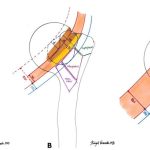

Sub-glenoid Dislocation
Frequently asked Questions
Does putting a dislocated shoulder back hurt, and why do I need another X-ray afterwards?
Reduction is usually less painful than the injury itself. Emergency teams usually give sedation, which leaves you drowsy and relaxed, or inject local anaesthetic into the joint. They then use gentle, steady techniques rather than force. Many people feel relief within moments as the shoulder goes back in. Tell the team when you last ate or drank, because that affects how safely sedation can be given. Afterwards, a second X-ray confirms the bone is properly seated. It also checks for a small fracture that the first picture missed or that the manoeuvre caused. If a shoulder will not go back easily, a short general anaesthetic is sometimes used. Most people go home the same day.
Why do doctors scan older patients after a first dislocation?
After the age of forty, the rotator cuff is often damaged when the shoulder comes out, sometimes more than the ligaments. A sizeable share of people in this age group have a cuff tear with a first dislocation, and the share rises with each decade. The tear is easy to miss because everyone expects a shoulder to be stiff and sore afterwards. Weakness is the clue. If lifting the arm sideways stays difficult or weak after a couple of weeks, once the first pain has eased, an ultrasound or MRI is sensible. Older patients are also more likely to have a fracture around the top of the arm bone. Younger people face a different problem, which is instability, so follow-up is adjusted to age and not only to the X-ray.
Which yoga or Pilates positions should I be careful with after a dislocation?
Be wary of positions that put your body weight through the arms or take the shoulder to the end of its range. Plank, chaturanga, downward dog held for long periods, deep backbends such as the wheel, and bound poses with the hands clasped behind the back all fall into this group. Supported poses with the arms close to your sides are usually kinder to begin with. Tell your instructor about the injury before the class starts. Skip any pose that gives you a sense of the shoulder wanting to slip. Stretching a muscle should feel like a pull. A pinching or unstable feeling deep in the joint means stop. Check with your physiotherapist before returning to classes, because the right time depends on your strength and how the injury was treated.
What should the shoulder look and feel like over the first fortnight?
The first three days are usually the worst, with an ache, swelling and a heavy feeling in the arm. Bruising often appears later than people expect. It can drift down the upper arm or across the chest as blood tracks under the skin, changing from purple to green and yellow as it fades. This pattern is expected and does not mean something has gone wrong. The pain relief your doctor advised keeps most people comfortable. Pain that is worsening rather than improving after the first few days, or a feeling that the shoulder is slipping again, is a reason to bring your review forward.
How long will I need a sling?
Most people wear a sling for a short period after the shoulder is put back, often one to three weeks, mainly for comfort while the pain and swelling settle. The length of time varies with your age, the injury and your doctor’s or physiotherapist’s advice, so follow the plan you were given. Gentle movement is usually started early, because a shoulder kept still for too long can stiffen, especially in older adults.
How is a dislocated shoulder different from a separated shoulder?
They involve different joints. In a dislocation, the ball of the upper arm bone leaves the shallow socket deep inside the shoulder. A separated shoulder is a ligament injury at the top of the shoulder, where the collarbone meets the shoulder blade. Both usually follow a fall, which is why people mix them up. A dislocated shoulder is held away from the body, looks squared off and is almost impossible to move, and it needs prompt treatment to put the bone back. A separated shoulder produces a tender bump on top, and most are managed with a sling and rehabilitation. An X-ray tells them apart, and occasionally both are present after a heavy fall.
Is it safe to push the shoulder back in myself, or let a teammate try?
No. Pulling on a dislocated shoulder without training can injure the tissues around it. Some dislocations also come with a fracture that nobody can see without an X-ray, and force can move the broken pieces. Muscle spasm makes success unlikely anyway. While you wait for help, rest the arm in whatever position feels most comfortable, with a pillow or folded towel between the arm and your chest. Avoid eating or drinking in case sedation is needed. Go to an emergency department and don’t wait to see how it feels tomorrow.
How will my doctor decide that I am ready to stop restrictions?
There is no calendar date that suits everyone. Doctors look at several things together. Movement should match the other shoulder and be pain-free. Strength in the rotator cuff and shoulder blade muscles, checked with a hand-held device or simple resisted tests, should be close to the other side, often around nine-tenths. The apprehension test moves the arm gently towards the position that caused the injury, and it should feel safe without a sense that the shoulder is about to slip. For sport or heavy work, you may also be asked to perform movements that resemble your activity, such as throwing or pushing. Passing these checks, as well as the time since the injury, decides when restrictions are lifted.
Is the shoulder likely to come out again?
It can, and the risk depends mostly on age. Younger people, especially teenagers and those in their twenties who play contact or overhead sports, are most likely to have repeat dislocations because the ligaments and socket rim are often damaged when the shoulder first dislocates. In older adults, repeat dislocation is less common, and stiffness or a cuff tear is the bigger concern. Physiotherapy that strengthens the rotator cuff and the muscles around the shoulder blade can lower the risk of another dislocation. If your shoulder feels like it might slip out again, ask your doctor or physiotherapist to review it.
Can a dislocated shoulder go unnoticed for weeks, and does it matter?
It is uncommon, but it happens. A missed or locked dislocation is most likely after a head injury, intoxication or a serious accident, when other problems take attention, and in frail older adults whose pain is modest. The shoulder stays stiff, with very little ability to turn the arm outwards. Time matters because scar tissue forms and the bone and cartilage around the joint change shape. After several weeks, a simple manipulation becomes risky and may not work. Surgery is sometimes needed, and in some older patients that means a shoulder replacement. Any shoulder that cannot rotate outwards after an injury deserves an X-ray, however mild the pain.