
Written by: Editorial Team of Dr Ayyappan V Nair
Medically Reviewed by: Dr. Ayyappan V. Nair
Senior Consultant – Shoulder Surgery, Arthroscopy and Sports Trauma
Manipal Hospitals, Bangalore
Last Reviewed: 8th August 2026
Introduction
Proximal humerus fractures (PHFs) are among the most common fractures encountered in the elderly population. While many fractures can be managed conservatively or with internal fixation, complex fracture patterns—particularly displaced three- and four-part fractures, head-splitting fractures, and fracture-dislocations—may require shoulder arthroplasty.
For decades, hemiarthroplasty (HA) was considered the standard arthroplasty option for complex proximal humerus fractures. However, the emergence of reverse shoulder arthroplasty (RSA) has substantially changed the treatment landscape.
Dr Ayyappan V Nair, considered as one of the best shoulder surgeon in India, says that the key question today is not simply whether hemiarthroplasty works, but rather:
Which patients are most likely to benefit from hemiarthroplasty, and when should reverse shoulder arthroplasty be preferred?
When Should Hemiarthroplasty Be Considered?
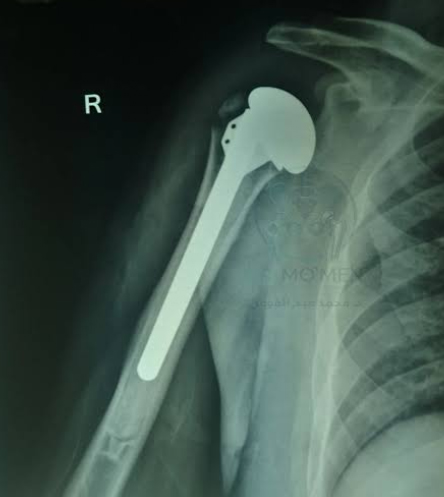
The traditional indications for hemiarthroplasty include complex proximal humerus fractures in which reconstruction of the humeral head or reliable internal fixation is unlikely to succeed.
Important fracture patterns include:
- Head-splitting fractures
- Fracture-dislocations
- Severely displaced and comminuted fractures
- Fractures with a high risk of avascular necrosis
- Delayed presentations where reconstruction of the humeral head is unlikely to be successful
Patient factors are equally important. Elderly patients with poor bone quality and low functional requirements may be candidates for arthroplasty rather than fixation, says Dr Ayyappan V Nair.
Assessing Bone Quality
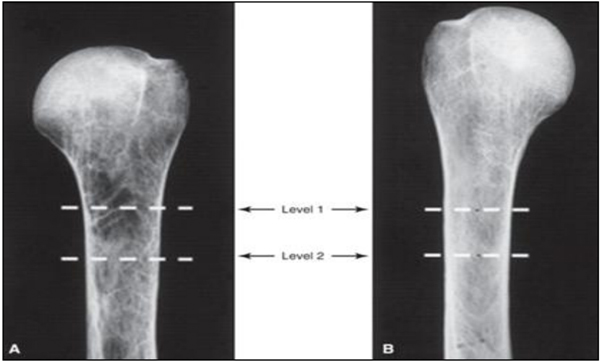
Cortical thickness of the humeral diaphysis can provide a useful indication of bone quality and the likelihood of obtaining adequate screw or implant purchase.
The combined cortical thickness is calculated using the average medial and lateral cortical thickness at two standardized levels. A cortical thickness of less than 4 mm suggests poor bone quality and inadequate fixation potential. In such circumstances, alternatives such as hemiarthroplasty may be considered.
Determining Prosthetic Height
Incorrect humeral height is one of the major causes of failure following hemiarthroplasty.
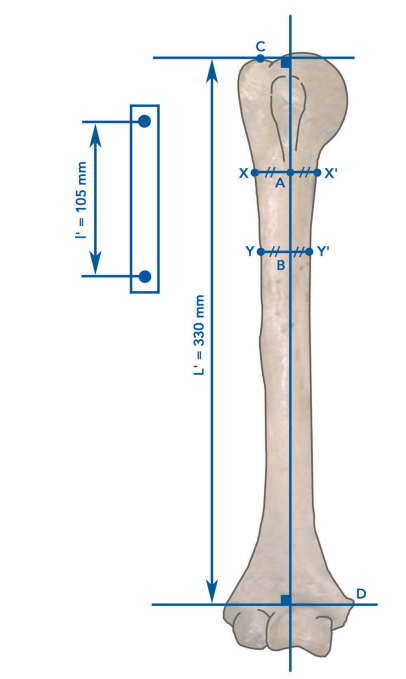
Prosthetic height can be estimated:
- Intraoperatively using bony and soft-tissue landmarks
- Preoperatively using the contralateral normal humerus on a calibrated radiograph
A radiographic ruler can be used to correct for magnification and improve the accuracy of preoperative measurements.
Getting the Height and Version Right
Two variables are particularly important:
- Humeral Height
- Humeral Retroversion
The anatomical and clinical studies support a range of approximately 20°–30°.
The greater tuberosity provides an important intraoperative reference.
Three landmarks are particularly useful:
- Acromiohumeral space: approximately 10 mm
- Superior aspect of the greater tuberosity: approximately 5 mm below the superior margin of the prosthetic head
- Absence of diastasis or overlap between the greater tuberosity and humeral shaft
How Much Tuberosity Malposition Is Too Much?
The position of the greater tuberosity has a direct effect on postoperative range of motion.
Loebenberg et al. (1) demonstrated that positioning the greater tuberosity approximately 10–16 mm distal to the superior margin of the prosthetic head resulted in better active forward flexion and external and internal rotation than positioning it either too proximally or too distally.
The reported mean active forward flexion was:
- 3–9 mm: 88°
- 10–16 mm: 126°
- 17–26 mm: 85°
External rotation was also substantially better in the anatomically positioned group.
This provides a practical message:
Tuberosity position is not a cosmetic issue—it directly influences shoulder function.
The Importance of Humeral Height
Both over-lengthening and excessive shortening can compromise the outcome. (2)
Lengthening by more than 10 mm can contribute to:
- Tuberosity detachment
- Nonunion
- Rotator cuff dysfunction
- Impingement
Conversely, shortening by more than 15 mm reduces deltoid tension and may compromise deltoid function.
Anatomical landmarks, including the relationship between the superior aspect of the humeral head and the insertion of the pectoralis major, can assist with restoration of humeral height. (3)
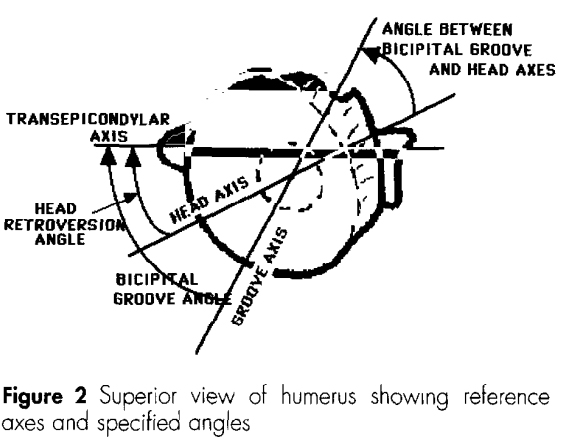
Retroversion: Avoiding the “Too Retroverted” Shoulder
Excessive retroversion can force the greater tuberosity into an abnormal horizontal position and increase tension on the tuberosity construct, potentially compromising union.
The bicipital groove can serve as a useful anatomical landmark. Studies measuring humeral anatomy have demonstrated a consistent relationship between the bicipital groove, transepicondylar axis and humeral head retroversion, supporting its use as an intraoperative reference. (4)
The “Unhappy Shoulder” Triad
One of the most useful practical concepts in fracture hemiarthroplasty is the unhappy shoulder triad:
- Prosthesis too proud
- Prosthesis too retroverted
- Greater tuberosity positioned too low
This combination is associated with poor outcomes following hemiarthroplasty.
Long-Term Outcomes
Long-term studies demonstrate that hemiarthroplasty can provide durable results in selected patients, particularly when the greater tuberosity heals anatomically.
Across five studies involving 198 patients with follow-up ranging from approximately 10 to 20 years: (5)
- Greater tuberosity healing ranged from 30% to 91%
- Better clinical outcomes were associated with anatomical tuberosity healing
- Failure rates ranged from 0% to 29%
- Glenoid erosion was reported in up to 72.7% at approximately 20 years
- Most failures were ultimately converted to reverse shoulder arthroplasty
Thus, hemiarthroplasty can be durable, but the quality of tuberosity healing remains a major determinant of function.
Complications
The complications following fracture hemiarthroplasty are multifactorial.
Infection
A meta-analysis involving 810 hemiarthroplasties reported superficial and deep infection rates of approximately 1.55% and 0.64%, respectively. (6)
Nerve Injury
The axillary nerve is the most commonly reported nerve at risk and injuries are usually related to excessive traction. Most are transient and resolve with observation and rehabilitation.
Tuberosity Malunion or Nonunion
Tuberosity malunion or nonunion remains one of the most important causes of poor functional outcome.
Stress Shielding
Stress shielding may result in proximal bone loss, subsidence or aseptic loosening. One study estimated an incidence of approximately 9%. (7)
Glenoid Erosion
Because hemiarthroplasty leaves the native glenoid intact, long-term articulation between the prosthetic head and glenoid can result in progressive glenoid erosion. This becomes particularly relevant in younger or more active patients.
Hemiarthroplasty Versus Reverse Shoulder Arthroplasty
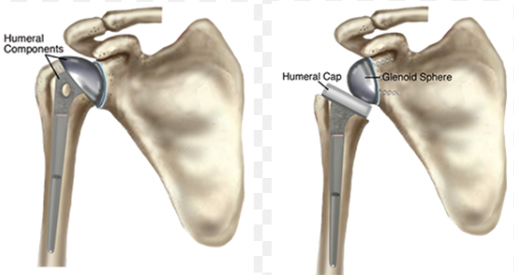
The major change in the management of complex proximal humerus fractures has been the increasing use of reverse shoulder arthroplasty.
The biomechanical advantage of RSA is particularly relevant in elderly patients with compromised rotator cuff function. RSA allows elevation and abduction to be generated predominantly through the deltoid, reducing dependence on a functional rotator cuff.
Recent comparative evidence increasingly favors RSA for many elderly patients with complex three- and four-part fractures.
A 2024 multicenter randomized controlled trial comparing RSA and hemiarthroplasty in patients with three- or four-part proximal humerus fractures (8) found significantly better Constant scores at two years with RSA:
RSA: 51.1 ± 14.9
versus
HA: 35.0 ± 13.5
with P = .004. One revision was reported in each group.
So, Does Hemiarthroplasty Still Have a Role?
Yes – but its role has become much more selective.
Hemiarthroplasty remains a technically demanding but valuable procedure when:
- The rotator cuff is functional
- Tuberosity reconstruction is achievable
- The patient has reasonable bone quality
- The fracture pattern is unsuitable for fixation but does not necessarily require RSA
- Preservation of the native glenoid is desirable
- The surgeon can reliably restore humeral height, version and tuberosity anatomy
Conversely, RSA may be preferable in elderly patients with:
- Poor tuberosity healing potential
- Pre-existing rotator cuff dysfunction
- Severe comminution
- Complex fracture patterns
- Low expectations for rotator cuff-dependent function
- A high risk of tuberosity failure
The Take-Home Message
The era when hemiarthroplasty was the default arthroplasty for complex proximal humerus fractures has passed.
However, hemiarthroplasty should not be considered obsolete.
Its success depends on a reproducible set of principles:
Correct patient selection → accurate humeral height → appropriate version → anatomical tuberosity positioning → secure tuberosity fixation → biological augmentation → restoration of rotator cuff function.
The most important lesson is that the prosthesis itself is only one part of the reconstruction.
In fracture hemiarthroplasty, the tuberosities are the operation.
As reverse shoulder arthroplasty continues to demonstrate superior functional outcomes in many elderly patients with complex proximal humerus fractures, the future of hemiarthroplasty is likely to be one of careful patient selection rather than routine application.
For the appropriately selected patient—and in the hands of a surgeon who understands the importance of anatomy, height, version and tuberosity healing – hemiarthroplasty can still provide a durable and functional shoulder.
For enquiries and online appointments, send a message to www.DrAyyappanVNair.com/contact
For informative videos related to Shoulder problems and their treatment options, Sports Injuries and other orthopedic conditions, visit our YouTube channel Bangalore Shoulder Institute – https://www.youtube.com/@BangaloreShoulderInstitute
References
- Loebenberg MI, Jones DA, Zuckerman JD. The effect of greater tuberosity placement on active range of motion after hemiarthroplasty for acute fractures of the proximal humerus. Bull Hosp Jt Dis. 2005;62(3-4):90-3. PMID: 16022219.
- Boileau P, Krishnan SG, Tinsi L, Walch G, Coste JS, Molé D. Tuberosity malposition and migration: reasons for poor outcomes after hemiarthroplasty for displaced fractures of the proximal humerus. J Shoulder Elbow Surg. 2002 Sep-Oct;11(5):401-12. doi: 10.1067/mse.2002.124527. PMID: 12378157.
- Murachovsky J, Ikemoto RY, Nascimento LG, Fujiki EN, Milani C, Warner JJ. Pectoralis major tendon reference (PMT): a new method for accurate restoration of humeral length with hemiarthroplasty for fracture. J Shoulder Elbow Surg. 2006 Nov-Dec;15(6):675-8. doi: 10.1016/j.jse.2005.12.011. Epub 2006 Oct 19. PMID: 17055748.
- Kummer FJ, Perkins R, Zuckerman JD. The use of the bicipital groove for alignment of the humeral stem in shoulder arthroplasty. J Shoulder Elbow Surg. 1998 Mar-Apr;7(2):144-6. doi: 10.1016/s1058-2746(98)90225-7. PMID: 9593093.
- Moews LD, Hyeamang LJ, Hornung AL, Vega TF, Morgan JT, Hummel A, Henriques ME, Bi AS, Verma NN. Long-term outcomes of hemiarthroplasty for complex proximal humerus fractures: a systematic review of clinical studies with minimum 10-year follow-up. JSES Rev Rep Tech. 2025 Nov 19;6(1):100616. doi: 10.1016/j.xrrt.2025.100616. PMID: 41550374; PMCID: PMC12803897.
- Kontakis GM, Tosounidis TI, Christoforakis Z, Hadjipavlou AG. Early management of complex proximal humeral fractures using the Aequalis fracture prosthesis: a two- to five-year follow-up report. J Bone Joint Surg Br. 2009 Oct;91(10):1335-40. doi: 10.1302/0301-620X.91B10.22473. PMID: 19794169.
- Nagels J, Stokdijk M, Rozing PM. Stress shielding and bone resorption in shoulder arthroplasty. J Shoulder Elbow Surg. 2003 Jan-Feb;12(1):35-9. doi: 10.1067/mse.2003.22. PMID: 12610484.
- Watts AC, Jenkins CW, Boyle SP, Crowther MAA, Monga P, Packham IN, Smith CC, Thomas WJ, Walton MJ; SHERPA trial group. Superior functional outcome following reverse shoulder arthroplasty compared to hemiarthroplasty for displaced three- and four-part fractures in patients 65 and older: results from a prospective multicenter randomized controlled trial – The shoulder hemiarthroplasty or reverse polarity arthoplasty (SHeRPA) trial. J Shoulder Elbow Surg. 2024 Nov;33(11):2335-2344. doi: 10.1016/j.jse.2024.05.016. Epub 2024 Jul 1. PMID: 38960139.