
Written by: Editorial Team of Dr Ayyappan V Nair
Medically Reviewed by: Dr. Ayyappan V. Nair
Senior Consultant – Shoulder Surgery, Arthroscopy and Sports Trauma
Manipal Hospitals, Bangalore
Last Reviewed: 8th August 2026
Proximal humerus fractures account for nearly 6% of all adult fractures. As our population ages, managing these injuries – particularly displaced 3- and 4-part fractures—remains a persistent challenge says Dr Ayyappan V Nair, considered the best shoulder surgeon in India.
Surgically Relevant Anatomy
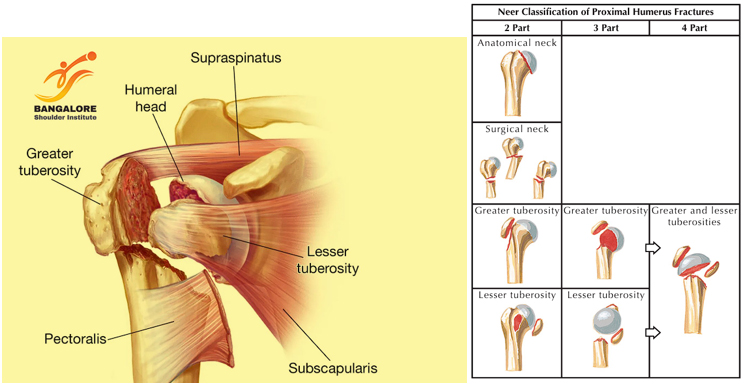
Successful fixation of the proximal humerus hinges on respecting two critical anatomical concepts: blood supply and the medial hinge.
- Vascularity: The vascular supply to the humeral head is delicate. While classic teaching heavily emphasized the ascending branch of the anterior humeral circumflex artery (arcuate artery), more recent perfusion studies highlight the critical role of the posterior humeral circumflex artery.
Evaluating for potential avascular necrosis (AVN) Hertel’s criteria: an anatomical neck fracture, a short calcar segment (<8 mm), and a disrupted medial hinge are strong predictors of ischemia. - The Medial Calcar (Hinge): Biomechanically, restoring the posteromedial hinge is non-negotiable. Without medial cortical support, any fixation construct is subject to catastrophic varus cantilever forces, inevitably leading to screw cut-out and loss of reduction.
History:Trauma/fall,Pain,Difficult to move arm
PE: Humeral tenderness, decreased ROM, deformity
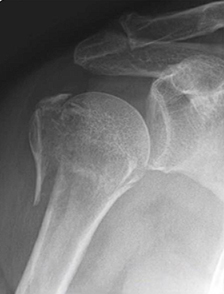
Diagnosis: Xrays, Ct Shoulder
Management
Dr Ayyappan V Nair, Shoulder Specialist and Surgeon says that we have moved away from a “one size fits all” approach. Our current modalities are highly dictated by patient age, bone density, and fracture personality.
- Non-Operative Management: Still the gold standard for minimally displaced or impacted fractures.
- Locking Plates (e.g., PHILOS): The traditional workhorse for displaced fractures. They offer rigid fixation and the ability to anatomically reduce complex, comminuted patterns. The downside? They require significant soft tissue stripping and carry a higher risk of avascular necrosis and intra-articular screw penetration if the fracture collapses.
- Intramedullary Nailing (IMN): Offers a load-sharing, minimally invasive construct.
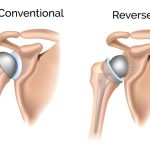
- Reverse Total Shoulder Arthroplasty (RTSA): RTSA has largely superseded hemiarthroplasty for displaced 3- and 4-part fractures in the elderly, offering more reliable pain relief and functional elevation.
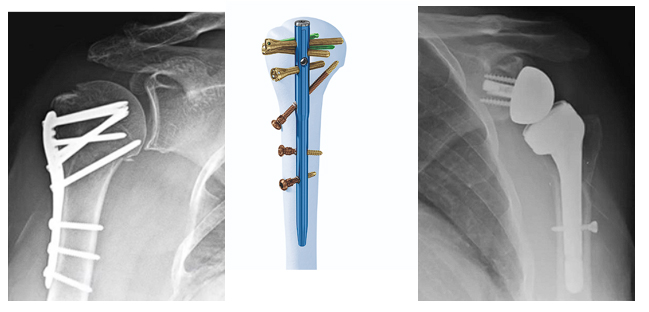
The Resurgence of Intramedullary Nailing
Intramedullary nailing in the proximal humerus historically suffered from a bad reputation, largely due to rotator cuff morbidity and poor control of the tuberosities. However, modern nail designs have revolutionized this approach.
Recent Advances in Nailing:
- Straight Nail Designs: Newer nails feature a straight proximal geometry. This allows for a more medial entry point at the articular margin of the humeral head, effectively sparing the critical insertion footprint of the supraspinatus.
- Multi-planar Locking: Modern nails utilize multi-axial, angle-stable proximal locking screws that allow direct capture of the greater and lesser tuberosities, acting as an internal scaffold.
- Calcar Screws: Just like in plating, modern nails allow for the insertion of calcar-specific locking screws to recreate medial support and resist varus deforming forces.
Nailing is particularly advantageous for 2-part surgical neck fractures and 3-part fractures in patients where preserving the soft tissue envelope is paramount.
Surgical Pearl: The choice between plate and nail should not be ideological. Use a plate when you have a highly comminuted head-split or a fracture pattern that absolutely demands open, direct anatomic reduction. Choose a nail for extra-articular surgical neck fractures where a closed or minimally open reduction can be achieved, allowing you to spare the blood supply and get the patient moving faster.
For enquiries and online appointments, send a message to www.DrAyyappanVNair.com/contact
For informative videos related to Shoulder problems and their treatment options, Sports Injuries and other orthopedic conditions, visit our YouTube channel Bangalore Shoulder Institute – https://www.youtube.com/@BangaloreShoulderInstitute
References:
De Joseph J, Gandhi P A, Padhi BK. PHILOS (Proximal Humerus Internal Locking System) Plating vs MultiLoc Nailing in Proximal Humerus Fracture: Systematic Review and Meta-Analysis of Radiological and Functional Outcomes. Cureus. 2024 Oct 24;16(10):e72251. doi: 10.7759/cureus.72251. PMID: 39583536; PMCID: PMC11584545.
Lapner P, Sheth U, Nam D, Schemitsch E, Guy P, Richards R; Canadian Shoulder and Elbow Society (CSES) and the Canadian Orthopedic Trauma Society (COTS). Management of Proximal Humeral Fractures in Adults: A Systematic Review and Meta-Analysis. J Orthop Trauma. 2023 Feb 1;37(2):e80-e88. doi: 10.1097/BOT.0000000000002494. PMID: 36155560.