

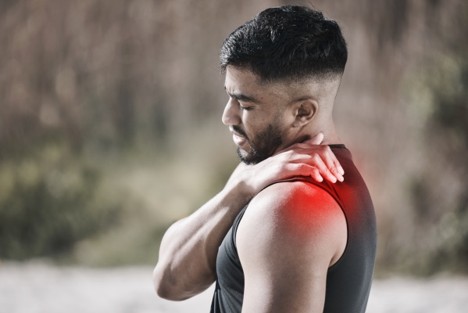
A shoulder dislocation in sport often changes how the joint absorbs force and controls movement, even after the initial pain settles. In younger or highly active athletes, the supporting tissues may not fully recover their original stability before returning to sport, increasing the risk of further dislocations.
The problem is particularly common in athletes involved in contact sports, throwing activities, gymnastics, and other high-speed overhead movements that repeatedly place the shoulder in vulnerable positions.
The Shoulder Prioritises Mobility Over Stability
The shoulder is capable of extraordinary movement because the socket is relatively shallow compared with other joints in the body. That mobility allows throwing, tackling, swimming, serving, and overhead striking at high speed, but it also means the joint relies heavily on soft tissue restraint rather than deep bony containment.
The labrum, capsule, ligaments, and rotator cuff work continuously to keep the humeral head centred during movement. A traumatic dislocation stretches or tears those structures. Once that support system weakens, the shoulder becomes easier to shift out of position during future sporting activity.
This explains why many athletes describe later dislocations as happening with less force than the original injury. The joint no longer has the same mechanical resistance it once had.
The First Injury Often Leaves Hidden Structural Damage
Many players feel considerably better once the shoulder is relocated, but improvement in pain does not mean the joint has fully recovered structurally. The first dislocation frequently leaves behind injuries that continue affecting stability long after swelling reduces.
Common findings after a sports-related dislocation include:
- Labral detachment from the socket rim
- Stretching of the joint capsule
- Compression injuries to the humeral head
- Small fractures around the socket edge
- Rotator cuff injury in older athletes
- Loss of neuromuscular control around the shoulder
These changes matter because the shoulder depends on precision movement during sport. Even subtle instability alters how force travels through the joint during tackling, throwing, landing, or overhead acceleration.
Athletes may initially notice hesitation rather than obvious weakness. The shoulder starts feeling unreliable in certain positions, particularly when the arm moves outward and backward under load.
Why Young Athletes Redislocate More Frequently
Recurrent shoulder instability is especially common in younger athletes who return to high-demand movement before the supporting tissues have fully recovered. Overhead and contact sports repeatedly place the shoulder in vulnerable positions associated with anterior instability.
A cricketer diving awkwardly, a tennis player serving at full reach, or a football player landing heavily on an outstretched arm can all place significant stress across the front of the shoulder joint. Once those tissues have been stretched or injured, the shoulder becomes easier to destabilise during forceful movement.
Several factors increase the risk of recurrence:
- Returning to sport too soon
- Previous instability episodes
- Contact or overhead sport
- General joint laxity
- Poor scapular control
- Bone loss after dislocation
- Incomplete rehabilitation
Repeated instability usually reflects ongoing structural vulnerability rather than poor pain tolerance alone.
Bone Loss Makes Recurrent Instability More Difficult to Control
Each shoulder dislocation can leave behind small areas of damage along the socket or humeral head where the bones collide during displacement. As these defects accumulate, movements that once felt stable may begin to trigger slipping, apprehension, or loss of control.
Management becomes more complex once the joint loses structural support. Rehabilitation still plays an important role in restoring muscle control and movement quality, although significant bone damage can limit how much stability can be regained without surgery. Athletes dealing with long-standing instability often face more demanding recovery and return-to-sport decisions.
Two Fracture Pathways Require Different Management
Fractures associated with shoulder instability do not all occur through the same mechanism. Distinguishing between them helps guide treatment decisions and return-to-play expectations.
Acute Traumatic Fracture Pathway
A forceful collision, fall, or violent dislocation can produce an immediate fracture around the shoulder joint. The humeral head or the front edge of the socket may break during the instability event itself.
These injuries usually present with severe pain, swelling, marked loss of function, and inability to continue sporting activity. Early imaging becomes essential because joint alignment, nerve function, and fracture stability all need assessment quickly.
Progressive Bone Damage Pathway
A second pattern of shoulder instability develops gradually through repeated subluxations or partial dislocations. Small areas of bone damage accumulate over time, even when symptoms settle between episodes.
Some athletes continue playing because the shoulder feels manageable after each event, although the underlying bone loss may still progress. As socket support decreases, maintaining stable shoulder control becomes far more difficult and surgery may eventually be required.
This distinction is important clinically because acute trauma and long-term instability are managed very differently.
Recurrent Instability Changes Performance Before Daily Function
Recurrent shoulder instability is often underestimated because daily activities may still feel relatively normal. Problems usually become noticeable under sporting load, particularly during fast or forceful movement.
Athletes may experience:
- Reduced confidence during tackles or collisions
- Hesitation with overhead movement
- A slipping sensation while throwing
- Early shoulder fatigue
- Loss of power or follow-through speed
- Avoidance of certain arm positions
To stay active, players often change their movement patterns without realising it. Although those adjustments may help temporarily, they can place extra strain on the rotator cuff, neck, scapular muscles, or opposite side of the body, making rehabilitation more difficult later on.
Rest Alone Rarely Solves the Problem
A short period of rest can reduce shoulder pain without fully restoring joint stability. In some athletes, the supporting tissues remain stretched or damaged even after inflammation settles, increasing the risk of another dislocation after returning to sport.
Successful recovery focuses on rebuilding:
- Rotator cuff stability
- Scapular control
- Joint awareness and coordination
- Strength in vulnerable positions
- Tolerance to sport-specific loading
- Confidence during fast movement
Some first-time dislocations respond well to rehabilitation alone, while others require surgical stabilisation when the joint can no longer maintain reliable control.
Early Assessment Changes the Long-Term Outlook
Repeated shoulder dislocations rarely leave the joint unchanged. With each episode, supporting tissues can stretch further, bone damage may increase, and the shoulder gradually loses stable control during movement.
Assessment after the first instability event is important because underlying problems such as labral tears, capsular injury, bone loss, or rotator cuff damage are easier to manage before instability becomes recurrent.
Over time, uncontrolled instability affects not only pain levels but also confidence, coordination, and overall shoulder function during sport.
For enquiries and online appointments, send a message to www.DrAyyappanVNair.com/contact
For informative videos related to Shoulder problems and their treatment options, Sports Injuries and other orthopedic conditions, visit our YouTube channel Bangalore Shoulder Institute – https://www.youtube.com/@BangaloreShoulderInstitute