

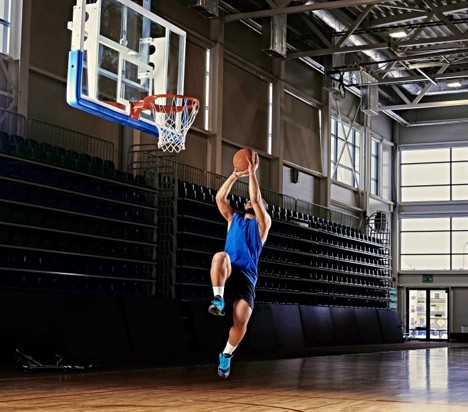
Overhead sports place extreme demands on the shoulder through high-speed, repetitive movement. Whether during a cricket delivery, tennis serve, or volleyball spike, the joint must generate force while relying heavily on mobility rather than stability, making it more vulnerable to injury.
Shoulder problems rarely develop from a single movement alone. Repetitive load, fatigue, poor recovery, and altered mechanics gradually overwhelm the tissue’s ability to adapt, leading to pain, instability, tendon overload, and cartilage damage over time.
The Shoulder Trades Stability for Range of Motion
Among all joints in the body, the shoulder allows the greatest degree of movement in multiple directions. That mobility helps athletes generate speed during throwing, serving, and other overhead movements. Still, it also leaves the joint less naturally stable because the upper arm sits within a shallow socket.
To maintain control, the rotator cuff, labrum, capsule, ligaments, and scapular muscles must work together continuously. As these structures fatigue or become overloaded, shoulder movement grows less efficient, and additional stress builds across the tendons and cartilage.
For overhead athletes, pain often develops gradually rather than after a single major incident. Subtle loss of control and repeated strain usually appear long before a significant structural injury occurs.
High-Speed Throwing Creates Repetitive Internal Stress
Overhead actions generate enormous rotational force inside the joint. During the cocking phase of throwing, the shoulder reaches extreme external rotation while the stabilising tissues resist forward translation of the humeral head. During follow-through, those same tissues absorb deceleration forces at high speed.
The mechanism is repetitive traction, torsion, and compression across the same structures thousands of times over a season. The consequence is cumulative tissue breakdown.
Athletes commonly notice:
- Shoulder pain after training rather than during activity
- Reduced throwing velocity or serving power
- Tightness at the back of the shoulder
- Clicking during rotation
- Fatigue earlier in the competition
- A “dead arm” sensation during overhead movement
These symptoms rarely appear randomly. They usually reflect a gradual failure of load management.
Rotator Cuff Overload Starts Before a Tear Develops
Athletes often associate rotator cuff injuries with complete tears, although the damage usually begins earlier through repeated overload and tendon irritation.
In overhead sports, the rotator cuff continuously stabilises the shoulder while larger muscles produce force. As fatigue develops, shoulder control becomes less accurate, allowing the humeral head to move slightly upward or forward. The reduced space beneath the acromion increases irritation around the tendons and places additional stress on the cuff.
Early symptoms are commonly pushed aside during training or competition. Continued overload and ongoing inflammation gradually weaken the tendon tissue, raising the likelihood of partial or full-thickness tears over time.
Labral Injuries Develop Through Repeated Shear Forces
The labrum acts as a stabilising cartilage ring around the shoulder socket. In overhead sport, it experiences repeated pulling and twisting forces, particularly where the biceps tendon attaches superiorly.
A SLAP tear develops when repetitive traction gradually peels the labrum away from bone. The athlete may not remember a single injury event because the mechanism is cumulative rather than traumatic.
Common warning signs include:
- Deep shoulder pain during late cocking
- Clicking or catching sensations
- Loss of control during release
- Reduced endurance during overhead activity
- Pain when lying on the affected shoulder
Once the labrum loses integrity, shoulder stability decreases further. The joint then compensates through altered movement patterns, increasing stress on surrounding muscles and tendons.
Posterior Shoulder Tightness Changes Joint Mechanics
Posterior capsule tightness is a commonly overlooked cause of throwing-related shoulder injuries. Repetitive overhead movement places heavy stress on the muscles at the back of the shoulder during deceleration, gradually making the posterior structures stiff and tight.
As the capsule loses flexibility, the humeral head no longer moves smoothly within the socket during overhead activity. The altered motion increases internal impingement around the rotator cuff and labrum, especially in throwing and serving athletes.
Early on, athletes often notice reduced fluidity or control in movement before significant pain develops.
Scapular Dysfunction Magnifies Shoulder Stress
The scapula acts as the foundation for efficient shoulder movement. When its motion becomes impaired, the shoulder loses mechanical stability and begins placing extra stress on the rotator cuff and labral structures.
Factors such as fatigue, poor posture, thoracic stiffness, weak serratus anterior activation, and muscular imbalance commonly contribute to scapular dysfunction. As control declines, the shoulder starts compensating through inefficient movement patterns.
Modern rehabilitation therefore focuses on the entire kinetic chain rather than isolated shoulder exercises alone, since trunk weakness and poor lower-body control often increase stress on the shoulder during overhead sport.
Young Athletes Face Different Risks Than Adults
In younger athletes, growth plates are more vulnerable than mature tendon or ligament tissue. Repetitive throwing can overload the developing growth plate at the top of the humerus, producing a condition commonly known as Little League Shoulder.
The mechanism is repetitive rotational stress across immature cartilage. The consequence is widening or irritation of the growth plate.
Young athletes may initially report vague soreness after training, but continued overload increases the risk of prolonged recovery and altered shoulder development. Early sport specialisation and year-round overhead activity have made these overuse injuries increasingly common.
Warning signs in younger athletes include:
- Pain while throwing hard
- Reduced accuracy
- Loss of throwing distance
- Shoulder soreness lasting beyond activity
- Progressive decline in performance
Pain in a growing athlete should never be dismissed as “normal soreness.”
Two Injury Pathways Require Different Management
Overhead athletes generally develop shoulder injuries through one of two pathways.
Repetitive Overload Pathway
This is the most common route. Repeated overhead motion gradually exceeds tissue recovery capacity. Tendons, cartilage, and stabilising structures begin failing through chronic overload rather than sudden trauma.
The consequence is progressive pain, reduced performance, and biomechanical compensation.
Acute Traumatic Pathway
A second pathway involves sudden force, such as a fall, collision, or dislocation during sport. Here, the tissue fails immediately because the load exceeds structural tolerance in a single event.
The consequence is often more obvious instability, acute weakness, or structural damage requiring urgent assessment.
Separating these pathways matters clinically because treatment priorities differ significantly between chronic overload and traumatic injury.
Recovery Depends on Load Management, Not Rest Alone
Simply stopping sport temporarily rarely fixes the underlying problem. The shoulder must regain strength, endurance, mobility, and movement efficiency before returning safely to overhead activity.
Effective rehabilitation usually includes:
- Rotator cuff strengthening
- Scapular stabilisation work
- Posterior capsule mobility
- Thoracic spine mobility drills
- Progressive throwing or serving programmes
- Workload monitoring
Athletes who return too quickly often re-enter the same overload cycle because the tissue capacity has not fully recovered.
Why Early Shoulder Symptoms Should Not Be Ignored
The shoulder performs remarkably well under extreme athletic demand, but it has limited tolerance for repetitive overload without recovery. Overhead sport exposes those limits quickly, particularly when fatigue, poor mechanics, and excessive training volume combine. Recognising the early warning signs and addressing the underlying mechanics before structural damage develops remains one of the most effective ways to protect long-term shoulder function.
For enquiries and online appointments, send a message to
www.DrAyyappanVNair.com/contact
For informative videos related to Shoulder problems and their treatment options, Sports Injuries and other orthopedic conditions, visit our YouTube channel Bangalore Shoulder Institute – https://www.youtube.com/@BangaloreShoulderInstitute