
Written by: Editorial Team of Dr Ayyappan V Nair
Medically Reviewed by: Dr. Ayyappan V. Nair
Senior Consultant – Shoulder Surgery, Arthroscopy and Sports Trauma
Manipal Hospitals, Bangalore
Last Reviewed: 24th September 2026
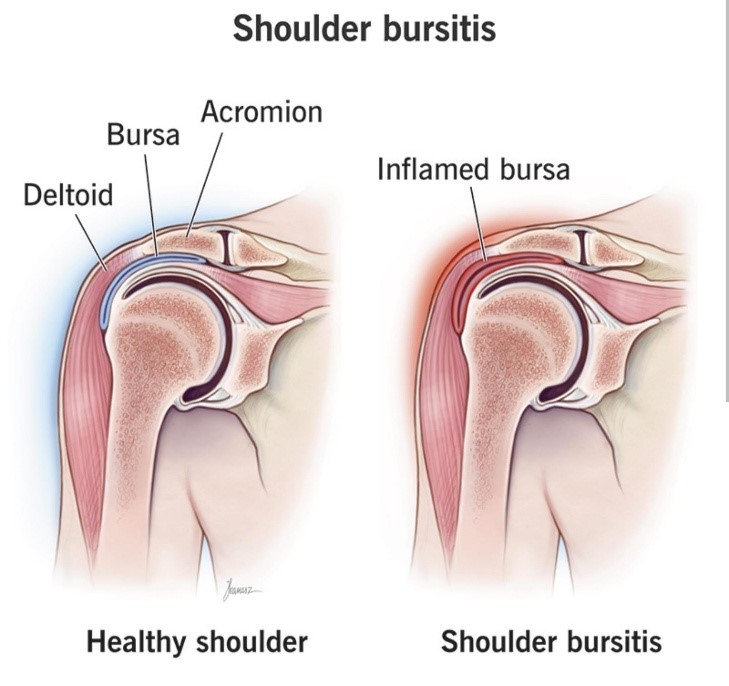 The human body contains over 150 bursae—tiny, fluid-filled sacs located between bones, tendons, muscles, and skin. Their primary job is to act as biological cushions, reducing rubbing and friction near joints that perform repetitive motions, such as the shoulder, elbow, hip, and knee.
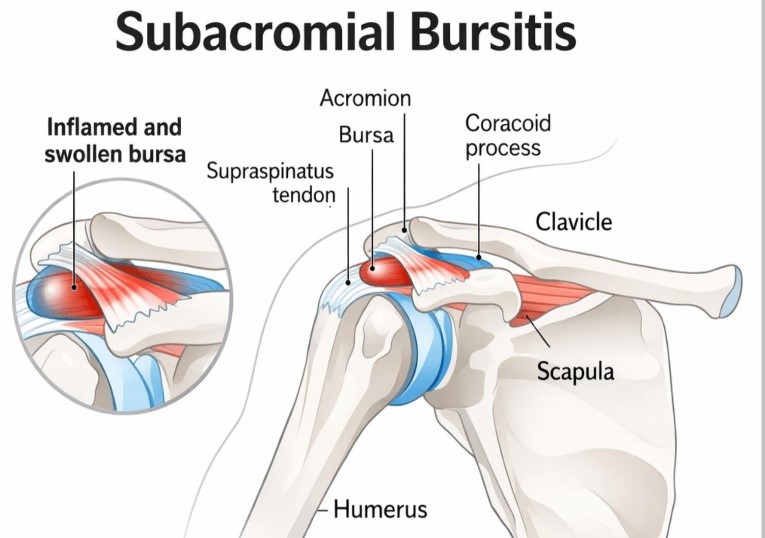
However, when a bursa becomes irritated or inflamed, it leads to a painful condition known as bursitis. While the shoulder has several bursae, the subacromial bursa is the most frequently affected, earning shoulder bursitis the clinical name of subacromial bursitis.
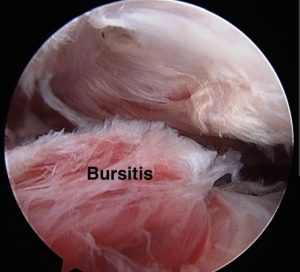
Located between the humerus (upper arm bone) and the acromion (the top of the shoulder blade), this bursa physiologically functions to facilitate “the gliding of the supraspinatus tendon within the subacromial space and reducing friction between the tendon and the coracoacromial arch during arm abduction”. But when trauma, arthritis, or repetitive stress narrows this space, it creates friction, leading to “aseptic inflammatory reactions such as hyperemia, edema, exudation, proliferation, thickening, and adhesion of the bursal wall”.
Recognizing the Symptoms
The symptoms of subacromial bursitis can vary based on the underlying cause, but commonly include:
- Localized Pain: Aching or sharp pain in the shoulder, particularly when moving the arm away from the body or reaching overhead.
- Radiating Discomfort: In some cases, the pain may travel down the arm toward the elbows and wrists.
- Physical Changes: Inflammation, a feeling of warmth over the joint, and a severely limited range of motion.
- Systemic Symptoms: If the bursa is infected (septic bursitis), you may occasionally experience a fever.
What Causes Subacromial Bursitis?
Inflammation of the subacromial bursa can stem from a direct injury, an infection, or underlying rheumatic conditions. It is frequently seen in individuals whose occupations or hobbies involve repetitive overhead motions, such as painting, swimming, basketball, or football. Subacromial bursitis can even be considered an early pathological change leading to Subacromial Impingement Syndrome (SIS).
According to clinical observations, several key risk factors can increase your likelihood of developing the condition:
- Pre-existing conditions like Gout, Diabetes, Uremia, or Rheumatoid Arthritis.
- Poor posture, which can alter the biomechanics of the shoulder.
- Inadequate recovery from a previous shoulder injury.
Evolving Treatment Modalities: What 2026 Research Says
Traditionally, subacromial bursitis has been treated with conservative, non-surgical methods such as rest, ice, physical therapy, and Non-Steroidal Anti-Inflammatory Drugs (NSAIDs). For more severe cases, doctors have long relied on corticosteroid injections to rapidly reduce inflammation.
However, recent medical literature emphasizes the long-term risks of steroids and highlights a shift toward biologic therapies, ultrasound-guided precision, and tailored injection agents. A comprehensive 2026 clinical review on injection-based therapies summarizes this transition:
“Corticosteroids (CS) remain the most widely used, providing robust short-term pain relief but with potential long-term complications. Randomized controlled trials suggest hyaluronic acid, nonsteroidal anti-inflammatory drugs, and hypertonic glucose offer alternative or adjunctive options. Emerging biologics like platelet-rich plasma (PRP) and interleukin-1 antagonists show promise… Ultrasound guidance enhances injection precision, and combining injection with physical rehabilitation optimizes outcomes.”
Based on this latest clinical research, today’s advanced treatment landscape includes:
- Hyaluronic Acid (HA) Injections: Recent data indicates that HA not only provides acceptable short-term efficacy for pain but also promotes tendon-to-bone healing and cellular regeneration. It is highly recommended for patients with contraindications to corticosteroids or as a combination therapy.
- Biological Agents (Platelet-Rich Plasma – PRP): Biological therapies like PRP are gaining traction. Unlike steroids, which just suppress inflammation, PRP aims “to modulate the activity of the progenitor cells and fibroblasts within the subintimal layer to promote tissue regeneration and healing”.
- Targeted NSAID Injections: Rather than oral medications, direct injections of NSAIDs (like ketorolac) into the bursa provide comparable pain relief to corticosteroids but are theoretically safer in the long term, as they do not adversely affect joint cartilage or chondrocyte viability.
- The Shift Away from Surgery: Subacromial decompression surgery was once heavily favored, but a 2024 updated guideline noted that national referrals for surgery decreased dramatically after “scientific evidence [showed] that surgery offers no additional benefit over non-surgical treatment”. Today, physical therapy remains the most effective and safest treatment for most patients.
How to Prevent Subacromial Bursitis
Protecting your shoulders from long-term wear and tear is highly achievable. Taking a few proactive precautions can help you avoid a painful bout of bursitis:
- Take Frequent Breaks: If you play sports or work a job requiring repetitive overhead movements, rest your shoulders regularly.
- Stretch Often: Practice daily stretching exercises to maintain joint mobility and flexibility.
- Mind Your Posture: Maintaining good posture prevents abnormal structural impingement in the shoulder joint.
- Protect Your Joints: Whenever possible, avoid exposing your body to extreme cold weather, which can stiffen joints and make tissues more prone to irritation.
For informative videos related to Shoulder problems and their treatment options, Sports Injuries and other orthopedic conditions, visit our YouTube channel Bangalore Shoulder Institute – https://www.youtube.com/@BangaloreShoulderInstitute