
Written by: Editorial Team of Dr Ayyappan V Nair
Medically Reviewed by: Dr. Ayyappan V. Nair
Senior Consultant – Shoulder Surgery, Arthroscopy and Sports Trauma
Manipal Hospitals, Bangalore
Last Reviewed: 24th September 2026
The shoulder is one of the most mobile joints in the human body, allowing a wide range of movement essential for daily activities and sports. This remarkable mobility, however, comes at the expense of stability, making the shoulder vulnerable to injuries such as a SLAP tear.
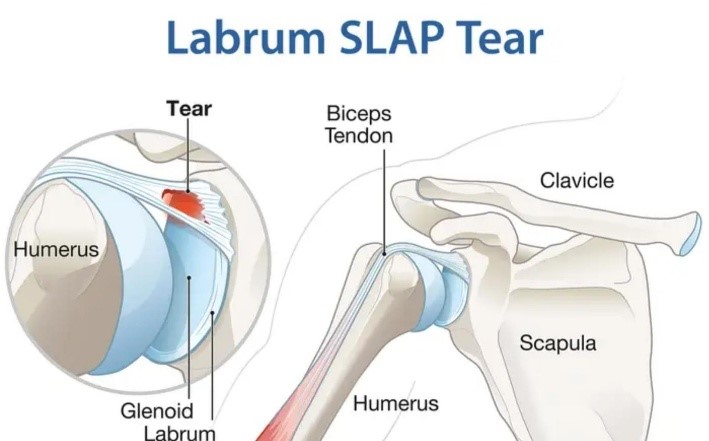
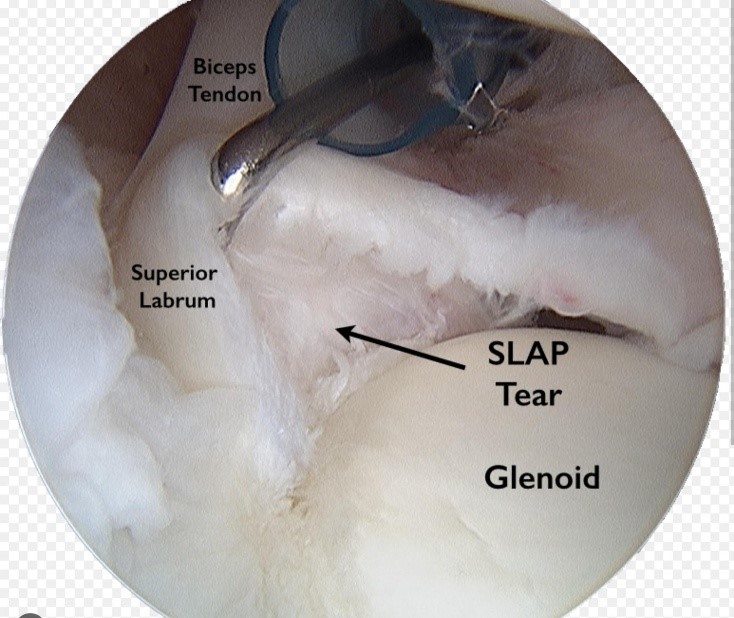
SLAP stands for Superior Labral Tear from Anterior to Posterior, describing an injury to the upper portion of the shoulder labrum where the long head of the biceps tendon attaches. The labrum is a fibrocartilaginous rim surrounding the glenoid (socket), deepening the socket and contributing significantly to shoulder stability. A SLAP lesion disrupts this important stabilizing structure, leading to pain, mechanical symptoms, and functional limitations.
Understanding Shoulder Anatomy
The shoulder is a ball-and-socket joint formed by:
- Humeral head (ball)
- Glenoid of the scapula (socket)
- Labrum, a fibrocartilaginous ring that increases socket depth
- Biceps tendon, which attaches to the superior labrum
The superior labrum serves as an attachment point for the long head of the biceps tendon and plays an essential role in maintaining glenohumeral stability, particularly during overhead activities.
What Recent Research Says
“The superior labrum and biceps anchor function as important stabilizers of the shoulder, particularly during overhead athletic activities.”
Provencher MT et al. Arthroscopy. 2022.
DOI: 10.1016/j.arthro.2021.11.043
Types of SLAP Tears
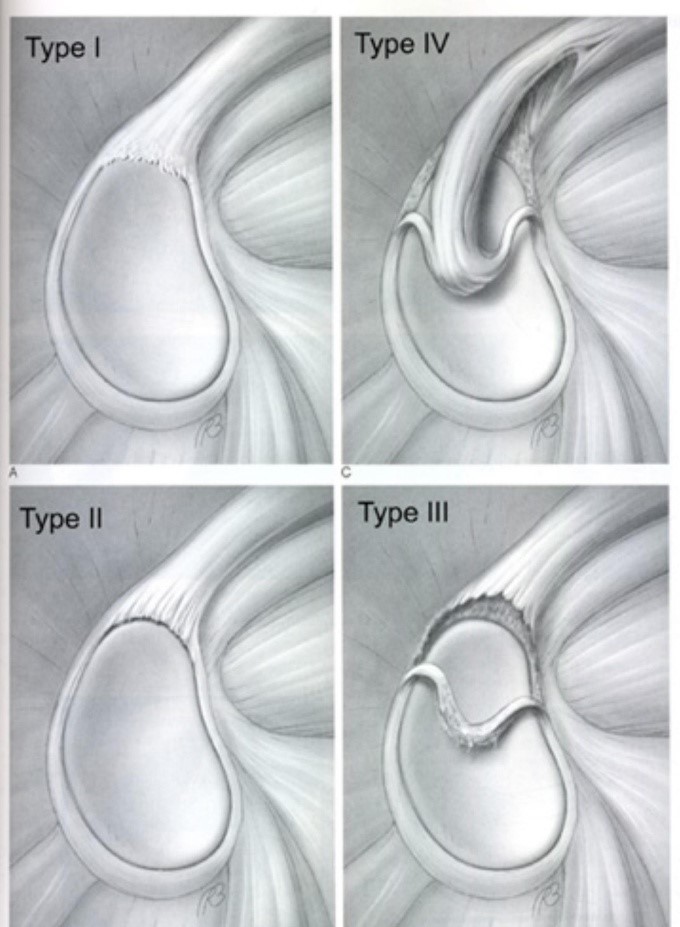
SLAP lesions are classified according to the extent and pattern of injury.
Type I
- Fraying and degeneration of the superior labrum
- Labrum remains attached to the glenoid
- Often age-related and asymptomatic
Type II
- Most common type
- Detachment of the superior labrum and biceps anchor
- Causes instability
- Subtypes:
- Anterior
- Posterior
- Combined anterior-posterior
Type III
- Bucket-handle tear of the labrum
- Biceps anchor remains intact
- Torn tissue may move within the joint
Type IV
- Bucket-handle tear extending into the biceps tendon
- Associated with biceps instability
- Treatment depends on tendon involvement
Causes of SLAP Tears
SLAP injuries can occur due to acute trauma or repetitive stress.
Common causes include:
- Falls onto an outstretched arm
- Sudden traction injuries
- Repetitive overhead sports:
- Cricket
- Volleyball
- Tennis
- Swimming
- Baseball
- Heavy lifting
- Age-related degeneration
Athletes and individuals involved in repetitive overhead activities are particularly at risk.
Recent Research Insight
“Overhead throwing athletes experience substantial torsional and traction forces at the biceps-labral complex, predisposing them to SLAP lesions.”
Sayde WM et al. Sports Health. 2021.
DOI: 10.1177/1941738120987952
Symptoms of a SLAP Tear
Patients may experience:
- Deep shoulder pain
- Pain during overhead activities
- Reduced shoulder strength
- Clicking or catching sensations
- Shoulder stiffness
- Decreased range of motion
- Difficulty lifting objects
- Reduced sports performance
Diagnosis
Diagnosis begins with a detailed clinical assessment, including:
Clinical Examination
- O’Brien Test
- Speed’s Test
- Dynamic Labral Shear Test
- Biceps Load Tests
Imaging Studies
- X-rays (to rule out associated pathology)
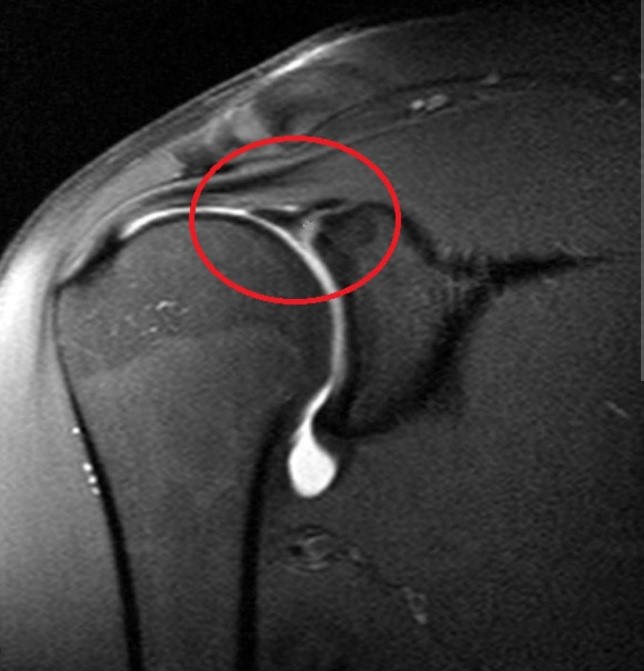
- MRI
- MR Arthrogram (gold standard for labral pathology)
What Recent Research Says
“MR arthrography remains one of the most reliable imaging modalities for diagnosing superior labral pathology.”
Magee T. AJR American Journal of Roentgenology. 2023.
DOI: 10.2214/AJR.22.28548
Treatment of SLAP Tears
Treatment depends on:
- Patient age
- Activity level
- Type of SLAP lesion
- Associated injuries
- Sports participation
Non-Surgical Treatment
Many patients improve without surgery.
Conservative management includes:
- Activity modification
- Anti-inflammatory medications
- Physiotherapy
- Rotator cuff strengthening
- Scapular stabilization exercises
- Posterior capsule stretching
Research Evidence
“Non-operative treatment can provide successful outcomes in selected patients, particularly non-throwing athletes and lower-demand individuals.”
Edwards SL et al. Journal of Shoulder and Elbow Surgery. 2022.
Modern Surgical Management
When symptoms persist despite adequate rehabilitation, surgery may be recommended.
1. Arthroscopic SLAP Repair
The traditional treatment for Type II SLAP lesions:
- Minimally invasive
- Suture anchors used to reattach the labrum
- Preservation of native anatomy
2. Biceps Tenodesis
Increasingly preferred in:
- Patients over 35–40 years
- Degenerative SLAP tears
- Failed previous repairs
This procedure detaches the biceps from the labrum and reattaches it to the humerus.
Recent Research Insight
“Biceps tenodesis has demonstrated comparable or superior outcomes compared with SLAP repair in selected patient populations, especially middle-aged individuals.”
Hurley ET et al. American Journal of Sports Medicine. 2023.
DOI: 10.1177/03635465231164079
Emerging Surgical Techniques
Recent advances include:
- Knotless suture anchor systems
- All-suture anchors
- Biological augmentation using platelet-rich plasma (PRP)
- Improved arthroscopic instrumentation
- Patient-specific treatment algorithms
Rehabilitation After Surgery
Rehabilitation is critical for successful outcomes.
Typical protocol:
Phase 1 (0–4 weeks)
- Sling immobilization
- Gentle passive motion
Phase 2 (4–8 weeks)
- Active-assisted exercises
- Range of motion restoration
Phase 3 (8–16 weeks)
- Strengthening exercises
Phase 4 (4–6 months)
- Return to sports and heavy activities
Key Takeaway
SLAP tears are a common cause of shoulder pain, particularly in athletes and individuals performing repetitive overhead activities. Accurate diagnosis and individualized treatment are essential. Advances in arthroscopic surgery, biceps tenodesis techniques, and biological augmentation have significantly improved outcomes, allowing many patients to return to work, sports, and daily life with excellent shoulder function.
For informative videos related to Shoulder problems and their treatment options, Sports Injuries and other orthopedic conditions, visit our YouTube channel Bangalore Shoulder Institute – https://www.youtube.com/@BangaloreShoulderInstitute
Suggested Recent References
- Provencher MT et al. Arthroscopy. 2022.
- Hurley ET et al. Am J Sports Med. 2023.
- Magee T. AJR Am J Roentgenol. 2023.
- Edwards SL et al. J Shoulder Elbow Surg. 2022.
- Sayde WM et al. Sports Health. 2021.