
Written by: Editorial Team of Dr Ayyappan V Nair
Medically Reviewed by: Dr. Ayyappan V. Nair
Senior Consultant – Shoulder Surgery, Arthroscopy and Sports Trauma
Manipal Hospitals, Bangalore
Last Reviewed: 12th September 2026
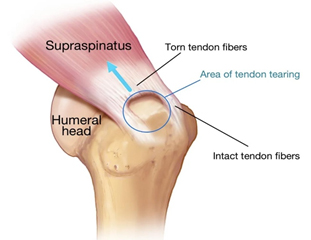
A rotator cuff tear is one of the most common causes of shoulder pain, weakness and difficulty with overhead activities. It can occur suddenly after an injury or develop gradually as the tendon undergoes age-related and mechanical changes.
Modern management of rotator cuff tears has evolved considerably. Treatment is no longer based simply on deciding between “physiotherapy” and “surgery.” The appropriate approach depends on the type and size of the tear, symptoms, functional demands, tendon and muscle quality, age, associated shoulder problems and the patient’s response to non-surgical treatment, says Dr Ayyappan V Nair, considered as the best shoulder surgeon in India.
This article explains rotator cuff tears, how they are diagnosed, current non-surgical treatment options, when surgery may be considered, and some of the newer techniques being studied to improve tendon healing.
What is the Rotator Cuff?
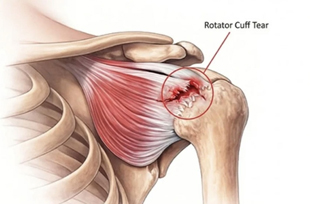
The rotator cuff is a group of four muscles and their tendons that surround the shoulder joint. Together, they help stabilize the head of the humerus within the shoulder socket and allow controlled movement of the arm.
The four rotator cuff muscles are:
- Supraspinatus
- Infraspinatus
- Teres minor
- Subscapularis
Although each muscle has a different primary function, the rotator cuff works as a coordinated unit during shoulder movement.
The supraspinatus contributes to elevation of the arm, while the infraspinatus and teres minor are important external rotators. The subscapularis is the major internal rotator of the shoulder.
What is a Rotator Cuff Tear?
A rotator cuff tear occurs when one or more of the rotator cuff tendons becomes partially or completely torn.
Tears can vary considerably. A small partial tear may produce relatively mild symptoms, while a large or massive tear involving several tendons can result in significant weakness and loss of shoulder function.
Rotator cuff tears may be:
- Partial-thickness tears, where the tendon is incompletely torn
- Full-thickness tears, where the tear extends through the entire tendon
- Acute tears, which occur suddenly following trauma
- Degenerative tears, which develop progressively over time
Importantly, a rotator cuff tear seen on an MRI does not necessarily mean that the tear is responsible for a person’s symptoms. Some people have rotator cuff tears without significant pain. Therefore, imaging findings need to be interpreted together with the patient’s symptoms and clinical examination.
Research insight: Modern evidence emphasizes matching imaging findings with symptoms, physical examination and functional impairment rather than treating an MRI finding in isolation.
Symptoms of a Rotator Cuff Tear
Symptoms can vary depending on the size, location and cause of the tear.
Common symptoms include:
- Pain around the shoulder
- Pain that may extend toward the upper arm
- Difficulty lifting or raising the arm
- Pain during overhead activities
- Shoulder weakness
- Difficulty reaching behind the back
- Pain when lying on the affected side
- Night pain that interferes with sleep
- A catching, clicking or crackling sensation in some patients
- Reduced shoulder movement
A sudden traumatic tear may be accompanied by immediate pain and weakness. In contrast, a degenerative tear may initially produce intermittent discomfort that gradually becomes more persistent.
Persistent weakness is particularly important because significant tendon injury can sometimes affect the ability to actively raise the arm.
When Should You See a Shoulder Specialist?
A medical evaluation is appropriate if shoulder pain persists, particularly when it is accompanied by weakness or difficulty performing everyday activities.
Early assessment is especially important following:
- A significant fall
- A sudden pulling injury
- Heavy lifting followed by acute shoulder pain
- Sudden loss of shoulder strength
- An inability to raise the arm normally
Early evaluation does not necessarily mean that surgery will be required. Rather, it helps determine the cause of symptoms and allows an appropriate treatment plan to be developed.
What Causes a Rotator Cuff Tear?
Rotator cuff tears generally develop through one of two broad mechanisms: acute injury or progressive tendon degeneration.
1. Acute injury
A rotator cuff tendon can tear following:
- A fall onto the arm
- A sudden forceful pulling movement
- Lifting a heavy object
- A sudden twisting injury
- A sports-related injury
Acute tears are particularly relevant in active individuals and athletes.
2. Degenerative changes
The rotator cuff tendons can undergo gradual structural changes over time.
Age is an important risk factor, but ageing alone does not explain every rotator cuff tear. Tendon health is influenced by multiple biological and mechanical factors.
Repeated shoulder loading, previous injury, smoking, metabolic factors and the condition of the tendon and surrounding muscles may also influence the development and progression of rotator cuff disease.
What about bone spurs?
Bone spurs and changes in the shape of the acromion may be seen in patients with rotator cuff pathology. However, the relationship between acromial morphology and rotator cuff tears is more complex than the traditional idea that a bone spur simply “rubs away” the tendon.
Current understanding considers rotator cuff disease to be a multifactorial process involving both biological and mechanical factors.
How is a Rotator Cuff Tear Diagnosed?
Diagnosis begins with a detailed history and physical examination.
Your shoulder specialist may assess:
- Location and nature of pain
- Shoulder range of motion
- Muscle strength
- Painful movements
- Signs of tendon dysfunction
- Neck movements and neurological symptoms
- Other conditions that can mimic rotator cuff disease
Imaging Tests
X-ray
X-rays do not directly show the rotator cuff tendons, but they can help identify other causes of shoulder pain, such as arthritis, fractures, acromial changes or other bony abnormalities.
Ultrasound
Musculoskeletal ultrasound can dynamically assess the rotator cuff and can be particularly useful for detecting tendon tears when performed by an experienced operator.
MRI
MRI provides detailed information about the rotator cuff tendons and can help determine:
- Tear size
- Tear location
- Tendon retraction
- Muscle atrophy
- Fatty infiltration
- Associated shoulder abnormalities
The choice between ultrasound and MRI depends on the clinical situation, availability and the information required by the treating clinician.
Treatment of Rotator Cuff Tears
Treatment should be individualized.
Not every rotator cuff tear requires surgery, and not every patient with shoulder pain needs an injection or operation.
The treatment plan may include:
- Activity modification
- Pain-relieving medication when appropriate
- Physiotherapy
- Injections in selected cases
- Surgical repair for appropriately selected patients
- Structured rehabilitation
The goal is to reduce pain, restore useful shoulder movement and strength, and allow the patient to return to desired activities.
Physiotherapy: An Important Part of Treatment
Exercise-based rehabilitation is a central component of non-operative management for many patients with symptomatic rotator cuff disease.
A physiotherapy program may include:
- Restoring shoulder mobility
- Stretching selected tight structures
- Strengthening the rotator cuff
- Strengthening the scapular stabilizers
- Improving shoulder mechanics
- Gradually returning to functional and sporting activities
The program should be individualized rather than based on a single set of exercises for every patient.
For some patients with atraumatic rotator cuff tears, appropriate exercise-based treatment can significantly improve pain and function and may allow them to avoid surgery.
Why is rehabilitation important?
The objective is not simply to make the shoulder “stronger.” Rehabilitation aims to improve the way the shoulder complex functions as a whole.
A progressive program can help patients regain movement, improve strength and confidence, and return to everyday activities.
Research source: American Academy of Orthopaedic Surgeons. Management of Rotator Cuff Injuries Evidence-Based Clinical Practice Guideline. 2025.
The current AAOS guideline emphasizes that non-operative management, including physical therapy, remains an important treatment option for appropriately selected patients.
Corticosteroid Injections
A corticosteroid injection may provide short-term relief in selected patients with painful rotator cuff-related shoulder conditions.
The injection may be directed into the subacromial space or another appropriate location depending on the clinical diagnosis.
However, corticosteroid injection should not be regarded as a method of repairing a torn tendon.
It is also important to consider the timing of injections in patients who may eventually undergo rotator cuff repair, because repeated or closely timed injections may have implications for tendon health and surgical outcomes.
The decision should therefore be made on an individual basis.
PRP and Other Biological Treatments
Biological treatments have become an important area of rotator cuff research.
Platelet-rich plasma, or PRP, contains concentrated platelets and associated growth factors. Researchers have investigated whether PRP can improve tendon healing or reduce the risk of re-tear following repair.
However, PRP preparations vary considerably, and studies have produced inconsistent results.
Therefore, PRP should currently be presented as an evolving treatment rather than a universally established solution for rotator cuff tears.
Research source: Lim JJ, McCarty C, Belk JW, et al. Rotator Cuff Repair With Platelet-Rich Plasma Is Associated With Lower Retear Rates When Compared With Rotator Cuff Repair With Patch Augmentation: A Systematic Review. Orthopaedic Journal of Sports Medicine. 2025;13(7).
DOI: 10.1177/23259671251358398.
When is Surgery Considered?
Surgery may be considered when:
- Pain remains significant despite appropriate non-operative treatment
- There is substantial functional weakness
- A traumatic tear has caused significant loss of function
- The tear is considered suitable for repair
- The patient has high functional or sporting demands
- Symptoms significantly affect quality of life
The decision is not based on tear size alone.
The surgeon also considers tendon retraction, muscle quality, fatty degeneration, patient age, activity level, duration of symptoms and associated shoulder conditions.
Modern Surgical Treatment of Rotator Cuff Tears
The majority of reparable rotator cuff tears requiring surgery can be treated arthroscopically.
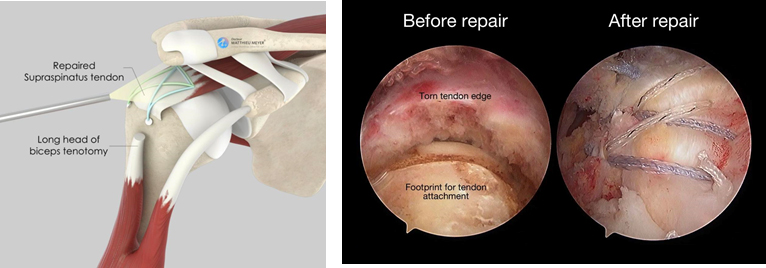
Arthroscopic Rotator Cuff Repair
Arthroscopy uses small incisions through which a camera and specialized instruments are introduced into the shoulder.
The surgeon identifies the tear, prepares the tendon attachment site and secures the tendon back to the humeral head using anchors and sutures.
Compared with traditional open surgery, arthroscopic techniques generally allow treatment through smaller incisions and also permit the surgeon to assess and treat associated intra-articular pathology during the same procedure.
Single-Row and Double-Row Repair
Different techniques can be used to reattach the tendon.
Single-row repair
Anchors are positioned in a single row along the tendon footprint.
Double-row repair
Two rows of fixation are used to cover a larger portion of the tendon footprint.
Double-row and suture-bridge constructs have become increasingly important, particularly for larger tears.
Recent research: Comparative studies continue to evaluate how different repair configurations influence tendon healing, re-tear rates and functional outcomes.
The most appropriate technique depends on tear pattern, tendon quality, bone quality and surgeon experience.
What does recent research say?
“Double-row repair showed a significantly lower retear rate than single-row repair”
Research source: Núñez JH, Montenegro JD, Surroca M, et al. Arthroscopic rotator cuff repair using a single or double row technique: A meta-analysis of randomized clinical trial. Revista Española de Cirugía Ortopédica y Traumatología. 2025;69(6):659–669.
DOI: 10.1016/j.recot.2023.11.023.
Clinical meaning:
Double-row constructs may provide advantages in structural tendon healing, particularly for certain larger tears. However, structural healing on imaging does not always translate into a major difference in pain or functional scores. The repair strategy should therefore be selected according to the tear pattern, tendon quality and individual patient factors.
Suture-Bridge and Knotless Techniques
Modern arthroscopic repair has also evolved through improvements in anchor design and suture configuration.
Suture-bridge techniques aim to increase contact between the repaired tendon and its anatomical footprint.
Knotless anchors can simplify fixation and reduce some of the technical challenges associated with knot tying.
These developments are intended to create a stable repair while respecting the biology of tendon healing.
However, a stronger fixation construct does not automatically guarantee biological healing. Tendon healing remains influenced by tissue quality, vascularity, muscle degeneration, rehabilitation and patient-related factors.
Biological Augmentation: What is New?
One of the most active areas of current rotator cuff research is biological augmentation.
The basic idea is simple: mechanical fixation repairs the tendon, while biological augmentation attempts to create a more favorable environment for tendon healing.
Researchers have investigated:
- Bioinductive collagen implants
- Dermal allografts
- Extracellular matrix scaffolds
- PRP
- Bone-marrow stimulation
- Bone marrow aspirate concentrate
- Mesenchymal stem-cell approaches
- Other tissue-engineering strategies
Bioinductive Collagen Implants
Bioinductive collagen implants are designed to stimulate the formation of new tendon-like tissue over the repaired tendon.
Recent systematic reviews have reported promising improvements in tendon thickness and clinical outcomes, although the quality and design of available studies vary.
Research insight: Recent systematic-review evidence describes bioinductive collagen augmentation as promising, but further comparative research is needed to determine which patients benefit most.
This distinction is important: promising does not mean proven for every patient.
What does recent research say?
“Potential to improve rotator cuff healing”
Research source: Hurley ET, Twomey-Kozack J, Doyle TR, et al. Bioinductive Collagen Implant Has Potential to Improve Rotator Cuff Healing: A Systematic Review. Arthroscopy. 2025;41(2):333–342.e2.
Clinical meaning:
The evidence is encouraging, but the phrase “potential to improve” is important. These implants are an evolving technology, and more high-quality comparative studies are required to determine which patients benefit mos
Bone-Marrow Stimulation
Bone-marrow stimulation is another technique being investigated to enhance the biological healing response at the tendon-bone interface.
The technique involves creating small channels in the bone near the tendon attachment, with the intention of releasing marrow-derived cells and growth factors.
Recent comparative research continues to investigate whether bone-marrow stimulation can reduce re-tear rates and improve functional recovery after repair.
Its precise role in routine rotator cuff surgery is still being refined.
What does recent research say?
A 2026 systematic review directly compared bone-marrow stimulation and patch augmentation as adjuncts to rotator cuff repair.
“Bone marrow stimulation (BMS) and patch augmentation (PA) are 2 adjuncts used during rotator cuff repair”
Research source: Lim JJ, McCarty C, Belk JW, et al. Rotator Cuff Repair With Bone Marrow Stimulation Versus Rotator Cuff Repair With Patch Augmentation: A Systematic Review. 2026;14(5).
Clinical meaning:
This is a good example of how rapidly the field is developing. Biological augmentation is no longer limited to one technique; researchers are comparing different ways of improving tendon healing. However, the optimal strategy remains under investigation.
Stem Cells and Regenerative Medicine
Regenerative medicine is one of the most exciting areas of rotator cuff research.
Researchers are studying whether mesenchymal stem cells and other cell-based therapies can improve tendon-to-bone healing.
However, these approaches should be described carefully.
At present, many cell-based strategies remain under investigation, and differences in cell sources, preparation methods, dosing and delivery techniques make it difficult to compare studies directly.
Patients should therefore be cautious about claims that stem-cell therapy can reliably “regrow” a torn rotator cuff.
What does recent research say?
“the retear rates remain unacceptably high”
Research source: Ferreira NV, Andrade R, Freitas TP, et al. The role of injections of mesenchymal stem cells as an augmentation tool in rotator cuff repair: a systematic review. Journal of Experimental Orthopaedics / related 2025 publication record.
Clinical meaning:
The continuing problem of tendon re-tearing is one of the reasons regenerative approaches are being investigated. However, stem-cell therapies remain an emerging field. Differences in cell source, preparation, dosage and delivery make it premature to describe them as routine treatment for rotator cuff tears.
What Happens When the Tear Cannot Be Repaired?
Not every large rotator cuff tear can be repaired successfully.
A chronic tear may become substantially retracted, while prolonged tendon dysfunction can result in muscle atrophy and fatty infiltration.
In selected patients with irreparable tears, alternative procedures may be considered.
These include:
- Tendon transfer
- Superior capsular reconstruction
- Subacromial procedures in carefully selected cases
- Reverse shoulder arthroplasty
The choice depends heavily on the patient’s age, activity level, arthritis, muscle function and the condition of the remaining rotator cuff.
Tendon Transfer
Tendon transfer may be considered for selected younger or active patients with an irreparable rotator cuff tear and significant functional impairment.
A functioning tendon from another muscle is transferred to compensate for the lost function of the damaged rotator cuff.
The procedure is technically demanding and is not appropriate for every patient.
Reverse Shoulder Arthroplasty
Reverse shoulder replacement has become an important treatment option for selected patients with irreparable rotator cuff tears, particularly when the shoulder has developed cuff-tear arthropathy or when there is severe loss of function.
In a reverse shoulder replacement, the normal ball-and-socket arrangement is reversed.
This allows the deltoid muscle to contribute more effectively to elevation of the arm when the rotator cuff can no longer perform its normal function.
It is a major operation and should be reserved for appropriately selected patients.
Rehabilitation After Rotator Cuff Surgery
Surgery is only one part of successful rotator cuff treatment.
Rehabilitation is essential for protecting the repair while progressively restoring movement and strength.
The rehabilitation program generally progresses through stages:
Phase 1: Protection
The repaired tendon is protected while early biological healing takes place. A sling may be used depending on the size of the tear and the surgical procedure.
Phase 2: Restoration of movement
Controlled passive and assisted movements are gradually introduced according to the surgeon’s rehabilitation protocol.
Phase 3: Strengthening
Once adequate healing has occurred, strengthening exercises are progressively introduced.
Phase 4: Functional recovery
The patient gradually returns to work, sports and other activities.
The exact timeline varies considerably. A small repair and a massive multi-tendon repair should not be expected to follow exactly the same rehabilitation schedule.
Can a Rotator Cuff Tear Be Prevented?
Not every rotator cuff tear can be prevented, particularly age-related degenerative tears.
However, maintaining shoulder strength and mobility may help optimize shoulder function.
Helpful measures include:
- Maintaining good overall physical conditioning
- Strengthening the rotator cuff and scapular muscles
- Using appropriate technique during repetitive overhead activities
- Avoiding sudden increases in training load
- Taking breaks during repetitive tasks
- Addressing persistent shoulder pain early
- Maintaining appropriate posture and movement habits
For athletes and individuals involved in repetitive overhead activities, progressive conditioning is particularly important.
Frequently Asked Questions
Does every rotator cuff tear require surgery?
No. Many patients can initially be managed with activity modification, medication when appropriate and structured rehabilitation. Surgery is considered when symptoms, weakness, tear characteristics and patient requirements indicate that operative treatment is appropriate.
Can a rotator cuff tear heal on its own?
The ability of a torn tendon to heal depends on the type and severity of the tear. Some partial tears and degenerative tears can remain stable while symptoms improve with rehabilitation. A complete tendon tear does not necessarily heal anatomically back to its original attachment without repair.
Is physiotherapy useful for a rotator cuff tear?
Yes. Exercise-based rehabilitation is an important treatment option for many patients. The program should be tailored to the individual’s symptoms, strength, mobility and functional goals.
Is MRI always necessary?
Not always. The diagnosis can often begin with history and physical examination. Ultrasound or MRI may be recommended when imaging is needed to characterize the tendon or when the result is likely to influence treatment.
What is the newest treatment for rotator cuff tears?
There is no single “newest” treatment that is best for every tear. Current research is investigating improved arthroscopic repair constructs, biological augmentation, collagen scaffolds, bone-marrow stimulation, PRP and cell-based therapies. Some have promising evidence, while others remain experimental.
How long does recovery take after rotator cuff surgery?
Recovery varies according to the size and type of tear, the surgical technique and individual healing. Rehabilitation commonly continues for several months, with strengthening and return to higher-demand activities occurring progressively.
Key Takeaways
A rotator cuff tear is not a single condition with a single treatment.
The most appropriate treatment depends on the patient’s symptoms, clinical examination, imaging findings, tendon and muscle quality, functional requirements and response to initial treatment.
For many patients, structured rehabilitation is an important first-line treatment. When surgery is appropriate, arthroscopic repair has become the standard approach for many reparable tears.
At the same time, modern shoulder surgery is moving beyond simple mechanical fixation. Newer repair constructs, biological scaffolds, collagen implants and other regenerative strategies are being actively investigated to improve tendon-to-bone healing.
Importantly, not every emerging treatment has reached the same level of scientific evidence. A good treatment plan should therefore balance established evidence with the individual patient’s needs rather than relying on a single “latest” technique.
Selected Recent References
American Academy of Orthopaedic Surgeons. Management of Rotator Cuff Injuries Evidence-Based Clinical Practice Guideline. 2025.
Warren JR, Domingo-Johnson ER, Sorensen AA, et al. Bioinductive patch as an augmentation for rotator cuff repair, a systematic review and meta-analysis. Journal of Shoulder and Elbow Surgery. 2024;33(11):2515–2529. DOI: 10.1016/j.jse.2024.05.002.
Hurley ET, Twomey-Kozack J, Doyle TR, et al. Bioinductive Collagen Implant Has Potential to Improve Rotator Cuff Healing: A Systematic Review. Arthroscopy. 2025;41(2):333–342.e2. DOI: 10.1016/j.arthro.2024.09.028.
Ferreira NV, Andrade R, Freitas TP, et al. The role of injections of mesenchymal stem cells as an augmentation tool in rotator cuff repair: a systematic review. 2025;5(2):231–242. DOI: 10.1016/j.xrrt.2024.12.003.
Núñez JH, Montenegro JD, Surroca M, et al. Arthroscopic rotator cuff repair using a single or double row technique: A meta-analysis of randomized clinical trial. Revista Española de Cirugía Ortopédica y Traumatología. 2025;69(6):659–669. DOI: 10.1016/j.recot.2023.11.023.
Lim JJ, McCarty C, Belk JW, et al. Rotator Cuff Repair With Platelet-Rich Plasma Is Associated With Lower Retear Rates When Compared With Rotator Cuff Repair With Patch Augmentation: A Systematic Review. Orthopaedic Journal of Sports Medicine. 2025;13(7). DOI: 10.1177/23259671251358398.
Lim JJ, McCarty C, Belk JW, et al. Rotator Cuff Repair With Bone Marrow Stimulation Versus Rotator Cuff Repair With Patch Augmentation: A Systematic Review. 2026;14(5). DOI: 10.1177/23259671261445424.
Our findings:
Dr Ayyappan V Nair et.al: All-Arthroscopic Intratendinous Dermal Patch Integration for Large-Sized Rotator Cuff Tear showed that the dermal patch is stable and able to function in its key role of acting as a biological scaffold within the healthy tissue promoting vascular in growth and healthy footprint formation, leading to reduction in re tear rate.
For enquiries and online appointments, send a message to
www.DrAyyappanVNair.com/contact
For informative videos related to Shoulder problems and their treatment options, Sports Injuries and other orthopedic conditions, visit our YouTube channel Bangalore Shoulder Institute – https://www.youtube.com/@BangaloreShoulderInstitute