

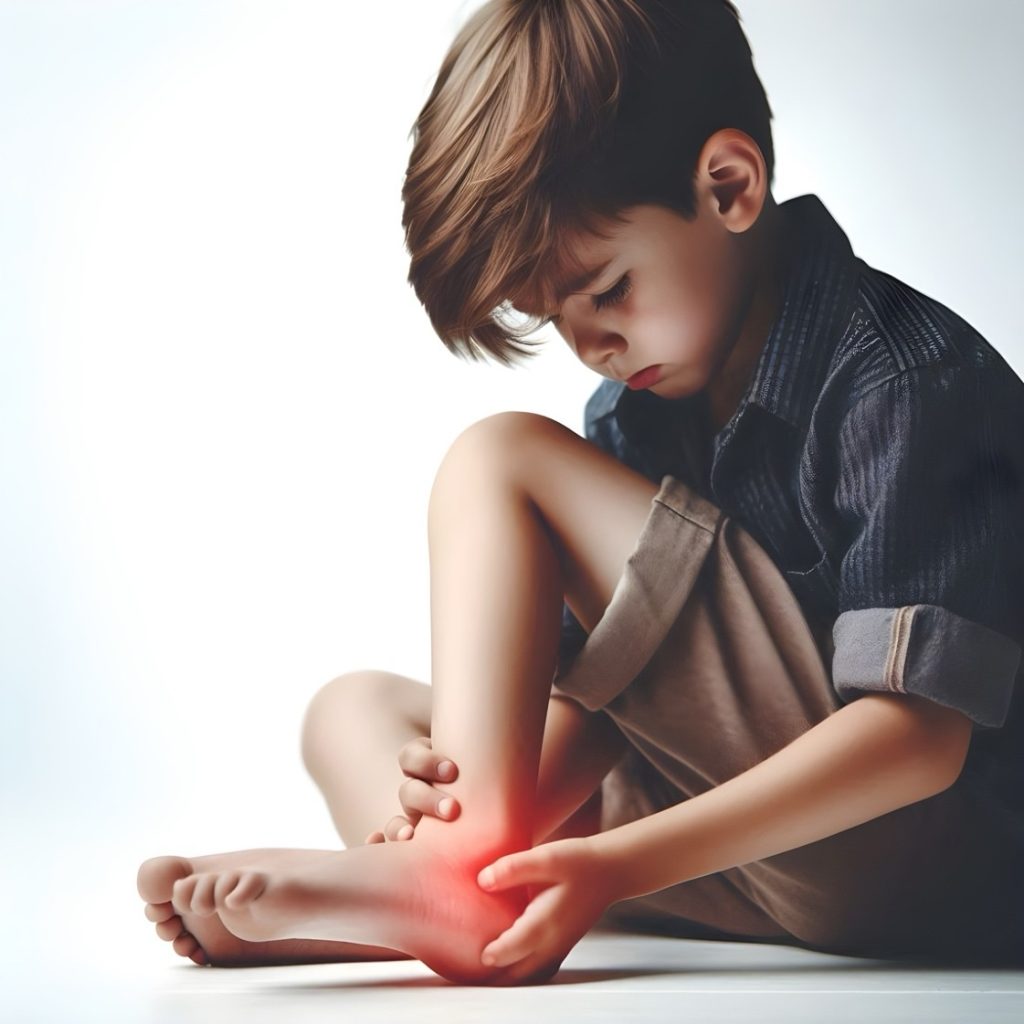
Lower leg pain in children is often labelled quickly as “shin splints.” In many cases, that assumption delays proper care. The challenge is that both shin splints and stress fractures begin in a similar way. The child complains of pain after running, jumping, or participating in sports. There may not be a single injury event.
What matters is recognising whether the pain is coming from irritated soft tissue or from the bone itself. The management pathway changes completely depending on that distinction.
What Is Actually Happening Inside the Leg
Understanding the difference becomes easier when you look at what each condition represents.
Shin splints involve irritation of the tissue covering the bone. Muscles repeatedly pull on this layer during activity. The result is inflammation along the inner edge of the shin.
Stress fractures develop when the bone is no longer able to keep up with repeated loading. Instead of adapting, it begins to form microscopic cracks. These can progress if loading continues.
The key difference lies in depth:
- Shin splints affect the surface
- Stress fractures affect the internal structure
This difference explains why symptoms behave differently.
Pain Pattern Often Gives the First Clue
The way a child describes pain can be more useful than the intensity itself.
With shin splints:
- Pain is spread along the length of the shin
- It often appears at the start of an activity
- Movement may ease symptoms slightly once warmed up
- Discomfort returns after stopping
With a stress fracture:
- Pain is located at one specific point
- Activity makes it steadily worse rather than better
- The child may begin to avoid putting weight through the leg
- The pattern becomes more consistent day by day
A child pointing to a broad area suggests irritation. A child pointing to a single spot raises concern for bone involvement.
Pain at Rest Changes the Level of Concern
One of the most important distinctions is what happens when the child is no longer active.
Shin splints usually settle with rest. Once the load is removed, the irritation reduces, and the child becomes comfortable.
A stress fracture behaves differently:
- Pain may continue even when sitting or lying down
- Night discomfort may begin to appear
- Simple activities such as walking become uncomfortable
When pain is no longer linked only to activity, it suggests the bone itself is under strain.
Why Children Are More Vulnerable Than Adults
Children’s bones are still developing. Growth plates are present near joints and are less resistant to repeated stress.
When loading increases too quickly:
- Muscles fatigue first
- Their ability to absorb force reduces
- Load transfers directly to the bone
- The bone begins to fail at a microscopic level
This process can move from shin splints to a stress fracture if early warning signs are ignored.
Simple Observations That Help at Home
While diagnosis should always be confirmed clinically, certain observations can guide early decisions.
Signs more consistent with shin splints:
- Pain improves after rest
- Discomfort is felt over a wider area
- The child continues the activity with mild limitation
Signs that suggest a stress fracture:
- Pain is sharply localised
- Walking or hopping increases discomfort significantly
- The child begins to limp or change their movement
A useful practical check is a gentle hop test. If the child cannot hop on the affected leg without sharp pain, further assessment is advisable.
When to Seek Specialist Assessment
Waiting too long is one of the most common reasons recovery becomes prolonged.
Assessment should be considered early if:
- Pain persists beyond one week despite rest
- Symptoms return immediately with activity
- There is a clear point of tenderness over the bone
- Daily walking becomes uncomfortable
Immediate review is advisable if:
- Pain occurs at rest or at night
- Swelling is visible at a specific point
- The child avoids weight-bearing
At this stage, the priority is to confirm whether the bone is involved.
Why Imaging Matters More Than Expected
Standard X-rays are often the first step, but early stress fractures may not appear immediately. The bone may only show changes once healing begins.
If suspicion remains high, an MRI is usually more informative. It can detect early bone stress before a visible crack develops.
This allows intervention at a stage where a full fracture can still be prevented.
Treatment Differs More Than Most Parents Expect
Management depends entirely on the underlying problem.
For shin splints:
- Activity is reduced, not stopped completely
- Low-impact movement can be maintained
- Gradual return is introduced once symptoms settle
For stress fractures:
- The bone needs protection from load
- Weight-bearing may need to be limited
- In some cases, a walking boot is required
The difference reflects the tissue involved. Soft tissue irritation tolerates controlled loading. Bone injury requires protection to heal.
Preventing Recurrence Starts With Load Awareness
Both conditions share common contributing factors:
- Sudden increase in training intensity
- Repetitive impact without adequate recovery
- Poor footwear or surface changes
- Fatigue-reducing shock absorption
Prevention is not about avoiding activity. It is about managing progression.
Simple principles make a difference:
- Gradual increase in training volume
- Adequate recovery between sessions
- Attention to early symptoms rather than ignoring them
Conclusion
Pain along the shin in a child should not be dismissed as a routine part of sport. The distinction between surface irritation and bone stress determines whether recovery takes weeks or months.
When symptoms remain broad, activity-related, and settle with rest, the cause is often manageable with modification. When pain becomes localised, persistent, or present at rest, the bone itself needs attention.
Identifying this change at the right time helps guide appropriate care, so the underlying cause is addressed before the bone is placed under continued strain, reducing the risk of a prolonged recovery or more complex intervention.
For enquiries and online appointments, send a message to www.DrAyyappanVNair.com/contact
For informative videos related to Shoulder problems and their treatment options, Sports Injuries and other orthopedic conditions, visit our YouTube channel Bangalore Shoulder Institute – https://www.youtube.com/@BangaloreShoulderInstitute