

A child who trains in a single sport all year often looks disciplined and ahead of peers. From a distance, that seems like the right path. What is less visible is how the same joints are being loaded in exactly the same way, week after week, during a phase when the body is still developing.
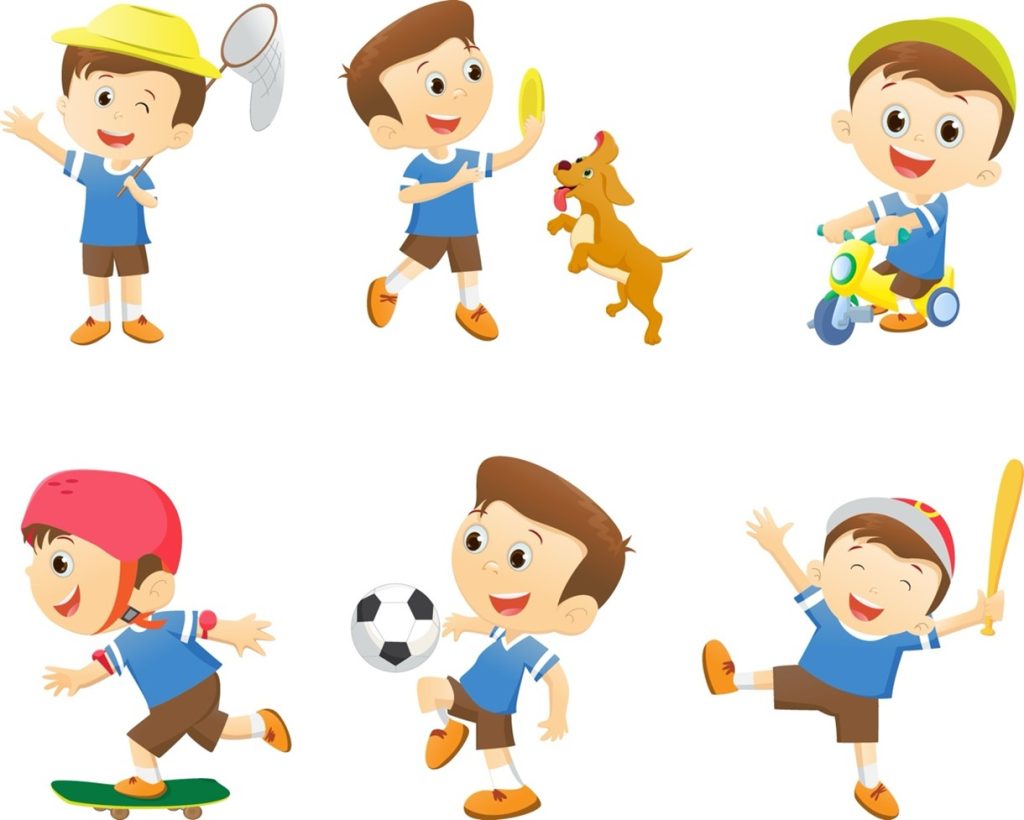
By contrast, a child who plays multiple sports is not just gaining variety. They are distributing mechanical stress across different tissues. That difference quietly shapes how joints grow, adapt, and tolerate load over time.
Repetition Without Variation Is Where Problems Begin
Every sport creates a pattern of movement that repeats.
- Overhead sports load the front of the shoulder
- Running-based sports stress the knee and shin
- Pivoting sports challenge ligaments around the knee and ankle
When the same pattern is repeated frequently, the same structures absorb force repeatedly. Recovery becomes incomplete, even when the child appears fit.
At tissue level, this leads to:
- Micro-fatigue in tendons
- Reduced capacity for repair
- Gradual overload without a clear injury event
This is why many young athletes describe a dull ache rather than a sudden injury. The problem builds quietly.
Growth Plates Are Sensitive to Directional Stress
Children are not small adults. Their joints contain growth plates, which are areas of developing cartilage responsible for bone lengthening. These areas respond not just to how much force is applied, but how that force is directed.
A single-sport pattern exposes the growth plate to:
- Repeated stress in one direction
- Uneven compression over time
- Increased risk of irritation or traction injury
When multiple sports are introduced, loading becomes more balanced.
- Different planes of movement are used
- Stress shifts across the joint surface
- No single area remains under constant strain
This supports more even development and reduces the likelihood of overload conditions.
Cartilage Health Depends on Movement Diversity
Cartilage relies on movement to maintain its structure. It does not have a direct blood supply, so it depends on compression and release to circulate nutrients.
With repetitive movement:
- The same cartilage zones are loaded repeatedly
- Nutrient exchange becomes less efficient
- Early irritation can develop in focal areas
With varied activity:
- Load is distributed across a wider surface
- Different regions are stimulated at different times
- The joint environment remains more balanced
This difference is subtle but important over months and years.
Muscle Imbalance Builds Faster in Single-Sport Training
Each sport strengthens certain muscle groups more than others. Over time, this creates predictable imbalances.
For example:
- Dominant muscles become stronger and tighter
- Supporting muscles lag behind
- Joint positioning becomes less controlled
In the shoulder, this affects how the shoulder blade moves. In the knee, it affects how force is absorbed during landing or change of direction.
Multi-sport participation naturally reduces this effect.
- Different muscle groups are activated
- Movement patterns vary
- Balance between opposing muscles improves
A balanced system distributes load more evenly, reducing stress on vulnerable structures.
Coordination Develops Through Variety, Not Repetition Alone
Repetition builds skill in a specific movement. It does not necessarily build adaptability.
When a child trains only one pattern:
- Movement is efficient in familiar situations
- Response is slower in unexpected positions
- Joint control may be less reliable outside that pattern
With exposure to different sports:
- The nervous system learns multiple movement strategies
- Balance, timing, and positioning improve
- The body responds better to unpredictable forces
This reduces the risk of awkward loading, which is often how injuries occur.
Fatigue Alters How Force Is Handled by Joints
Fatigue is not just about tiredness. It changes how the body absorbs load.
When the same muscles are used repeatedly:
- Their ability to stabilise joints reduces
- Shock absorption decreases
- Load shifts toward ligaments and joint surfaces
Single-sport training often creates this pattern.
Multi-sport activity spreads fatigue:
- Different muscle groups are used on different days
- Recovery is more complete
- Joint support remains more consistent
This is one of the less obvious but clinically important benefits.
What We See in Practice
Certain patterns tend to repeat in young athletes who specialise early:
- Shoulder pain in overhead sports
- Knee pain linked to repetitive running or jumping
- Elbow discomfort in throwing sports
These symptoms often:
- Develop gradually
- Improve with rest
- Return quickly with activity
In children who play multiple sports, the presentation is different.
- Symptoms are less persistent
- Recovery tends to be quicker
- Load can be modified more easily
This does not mean injuries do not occur. It means the system is more resilient.
Addressing the Performance Concern
A common worry is that playing multiple sports may slow progress in one. From a joint health perspective, early diversification supports long-term participation.
- It builds a broader physical base
- It reduces time lost to injury
- It allows progression without repeated setbacks
Specialisation can still occur later, when the body is better able to tolerate repeated load.
Practical Ways to Apply This Approach
This does not require an overly complex schedule. The goal is variation across time.
A simple framework:
- Rotate sports across seasons rather than stacking them
- Include activities that involve different movement patterns
- Allow periods of reduced structured training
Key points to monitor:
- Pain that returns with activity
- Persistent stiffness or reduced movement
- Changes in performance linked to discomfort
Early adjustment is often enough to prevent progression.
Long-Term Joint Health Starts Early
The effects of repeated loading during childhood do not always appear immediately. They influence how joints tolerate stress later in life.
Balanced development supports:
- Better joint alignment
- More efficient movement patterns
- Reduced risk of chronic issues
Encouraging variety during early years is not about limiting ambition. It is about protecting the structures that allow sustained performance.
Conclusion
When a child’s body experiences a range of movement, it adapts rather than compensates. Different sports place varied demands on joints and muscles, allowing recovery while building strength and coordination.
In practice, these children tend to move more efficiently, handle load better, and are less likely to develop ongoing joint issues. The goal is not to slow progress, but to support it in a way the body can sustain.
Encouraging more than one sport during growth helps build resilience and protects joint health for the future.
For enquiries and online appointments, send a message to www.DrAyyappanVNair.com/contact
For informative videos related to Shoulder problems and their treatment options, Sports Injuries and other orthopedic conditions, visit our YouTube channel Bangalore Shoulder Institute – https://www.youtube.com/@BangaloreShoulderInstitute